Dynamic Pricing for Vacation Rentals: A Step-by-Step Guide
Learn how dynamic pricing for vacation rentals works, how to set floors and ceilings, and whether software is worth the fee. A step-by-step 2026 guide.

LuxeSleeps manages 9 short-term rentals, and the pricing lesson is consistent: dynamic pricing for vacation rentals is worth it when you configure it with a sensible base price, a protected floor, and a ceiling, then audit it regularly. Software alone suggests rates. Your judgment on events and minimum stays, along with the channels you use, decides whether those rates make money.
Key Takeaways
- Dynamic pricing automatically adjusts nightly rates using demand, seasonality, local events, booking pace, and competitor rates.
- A 2026 study of 541 listings in 34 countries found an average 36.3% gross revenue increase per unit with dynamic pricing (Your.Rentals / PriceLabs).
- Setup comes down to four inputs: base price, minimum price, maximum price, and minimum-stay rules.
- Software pays off when the revenue lift exceeds the subscription fee plus the time you spend auditing recommendations.
- Dynamic pricing hurts when floors are too low, comp sets are wrong, or event dates are left unprotected.
- Owners who do not want to run the tools themselves can hand pricing to a manager that adjusts rates daily and reports profit monthly.
You know the moment. The calendar looks half empty in March, then a football weekend or a festival sells out and you realize you priced it like any other Saturday. Flat rate cards cannot react to that. Pricing automation can, and in 2026 the tools are mature enough that the real question is configuration, not whether to use one.
This guide walks through the process in order: what the term means, how engines calculate rates, how to configure limits, which options to choose, and how to measure results. It is written for owners who want numbers and a plain answer on cost versus lift.
Step 1: What Is Dynamic Pricing for Vacation Rentals?
Dynamic pricing for vacation rentals is the practice of adjusting your nightly rate automatically, often daily, based on demand signals instead of a fixed seasonal rate card. The engine compares your listing with similar properties and reads booking pace and lead time. It then raises or lowers each date within limits you set.
Revenue management is the broader discipline. It covers the pricing engine and minimum-stay rules. Gap-night discounts and channel mix are included too. Pricing software handles the first piece well. The rest needs a human who knows the market.
It also helps to know what it is not. Platform-native smart pricing is a built-in tool that optimizes for bookings on that platform. Third-party tools generally sync rates across several booking channels and give you more controls, such as date overrides and orphan-night rules.
Hotels and airlines have used the same logic for years. Yield management in those industries is the ancestor of what you now run on a three-bedroom house.
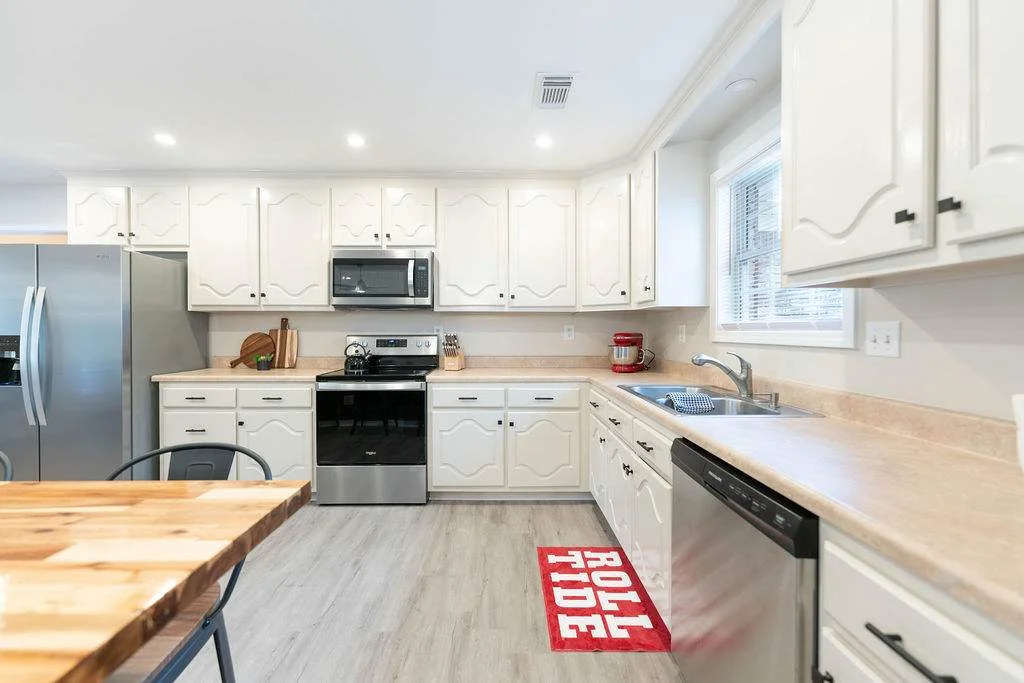
Fully stocked kitchen · Crimson Retreat
Step 2: How Does Pricing Software Calculate Your Nightly Rate?
Vacation rental pricing software calculates a nightly rate by starting from your base price and applying multipliers for seasonality, day of week, local events, booking window, and how competing listings are priced. The result is a recommended rate for every future date, refreshed daily in most tools.
Specifically, engines weigh these inputs:
- Comp set data: rates and occupancy for similar listings nearby.
- Booking pace: how fast your calendar fills compared with the market.
- Lead time: far-out dates price higher; last-minute dates discount.
- Events and seasonality: recurring demand spikes and slow months.
Tools differ in how far ahead they price and how much control they give you. Some update dates up to 18 months out and sync to connected booking sites. Others emphasize search-based demand signals. Compare features, not marketing claims.
Our view: the algorithm is only as good as your inputs. If your base price is a guess, every recommendation inherits the guess.
Step 3: How Do You Set Base Price, Floor, Ceiling, and Minimum Stay?
Base price and minimum price, along with maximum price, make up the rate limits that tell a pricing engine where to start and where it may never go. Minimum-stay rules then control how many nights a guest must book. Together they decide whether automation protects your revenue or erodes it.
- Set your base price at the typical rate for an ordinary night in your market, not your best weekend. Check comparable listings with the same bedroom count and amenities.
- Set your floor above your cost of hosting a night: cleaning, utilities, supplies, and platform fees. A floor that sits below that line fills the calendar and loses money.
- Set your ceiling high enough to capture major events. A ceiling that is too low is the most common way owners underprice a sold-out weekend.
- Set minimum stays by season. Longer minimums protect peak weekends; shorter ones help fill orphan nights between bookings.
- Add overrides for dates you know matter: home football weekends, festival dates, holidays.
Plan about an hour for the first setup and a short weekly review. Confirm event dates with the organizer each year rather than assuming last year's schedule.
Step 4: Dynamic Pricing vs. Platform Smart Pricing vs. Other Booking Sites
Platform smart pricing is a built-in feature that adjusts rates for your listing on that one platform only, while third-party dynamic pricing tools set rates across several channels from one dashboard. Other booking sites each need synced rates, which a channel manager or pricing tool can push for you.
| Approach | Channels | Controls | Best for |
|---|---|---|---|
| Platform-native smart pricing | Single platform only | Basic limits | One listing, light involvement |
| Third-party pricing tool | Multiple channels via sync | Floors, ceilings, overrides, stay rules | Hosts who will review recommendations |
| Manager-run revenue management | 15+ channels at LuxeSleeps | Daily adjustment plus local judgment | Owners who want hands-off results |
| Static seasonal rate card | Any | Manual changes | Not recommended in active markets |
Platform tools optimize for platform bookings. If you also sell through other booking sites and direct channels, you want one pricing brain across all of them. Direct booking sites can use the same logic when your channel manager syncs rates.
Step 5: What Are the Best Dynamic Pricing Tools for Vacation Rental Hosts?
The best dynamic pricing tool is the one that fits your listing count and your channels. It also has to match how much oversight you will provide. Most tools fall into three categories: standalone pricing engines, pricing built into a property management system, and platform-native pricing.
Evaluate on five points:
- Control over base, minimum, and maximum prices.
- Dynamic minimum stays, last-minute discounts, and orphan-night rules.
- Integrations with the major booking channels and your channel manager.
- Quality of market data behind the comp set.
- Fee structure: per listing, percentage of revenue, or bundled into a plan.
Pricing varies by plan and changes often, so check the vendor's current page before you commit. Many offer free trials, which is the cheapest way to test whether recommendations match your market.
A warning on overlap: if your property management system already includes pricing, a second subscription can mean paying twice for the same output. Check before adding another tool.
Step 6: How Much Revenue Can Dynamic Pricing Add?
Dynamic pricing can add meaningful revenue, though results depend on your market and your starting point. Your settings matter as well. A 2026 study of 541 listings in 34 countries found that properties using dynamic pricing saw an average 36.3% increase in gross revenue per unit. They also saw a 37.3% increase in nights booked. ADR fell by 0.7% (Your.Rentals / PriceLabs, 2026).
Other published estimates are more conservative. AvantStay (2026) puts the range at 10% to 40% annually, and Wheelhouse's research documents a 22% average improvement. Notice the pattern: occupancy rises and rates barely move. Gross revenue climbs because more nights book.
Treat every vendor-sourced figure as a ceiling, not a promise. Your lift is smaller if you were already adjusting rates weekly and larger if you were running one flat rate year-round.
A hypothetical break-even example
Assume a home earns $40,000 a year with static pricing, and software costs a few hundred dollars annually. A 10% lift adds $4,000. Even a lift of a few percent covers a typical subscription. The real cost is your time, so value your review hours honestly. These numbers are an illustration, not a forecast.
Step 7: When Does Dynamic Pricing Hurt Your Bookings?
Dynamic pricing hurts when its limits are wrong, its comp set is mismatched, or nobody audits what it recommends. The tool follows your rules; bad rules produce bad prices at machine speed.
Watch for these failure modes:
- Low floors: the engine chases occupancy and sells peak nights cheaply.
- Price wars: a comp set full of discounting listings drags your rate down with it.
- Wrong comps: a hot tub home compared with basic apartments gets undervalued.
- Review risk: guests who book at a bargain rate may expect more than the listing delivers, so condition and cleanliness matter even more.
Guest perception is manageable. Rates that move are normal on every booking site, and guests see the total before they book. The risk is inconsistency in value, not the fact that prices change.
We also recommend checking recommendations for your top event dates every month. Event weekends are where an unchecked algorithm costs the most.
Step 8: How Do You Test and Measure Results?
Measuring dynamic pricing means tracking ADR and occupancy before and after you switch. Track RevPAR too, using the same months in prior years when possible. RevPAR, revenue per available night, is the cleanest single figure because it combines rate and occupancy.
- Record 12 months of baseline ADR, occupancy, and gross revenue.
- Switch on automation with conservative limits.
- Compare the same calendar periods after 60 to 90 days.
- Adjust floors, ceilings, and minimum stays, then repeat.
Do not judge results from one week. Seasonality and events distort short windows. Net out the subscription fee and any extra management time before declaring a win.
At LuxeSleeps, we report gross rental income and total expenses in monthly owner statements. Profit is there as well, so owners see what pricing is producing after costs. The owner portal also shows bookings as they arrive.
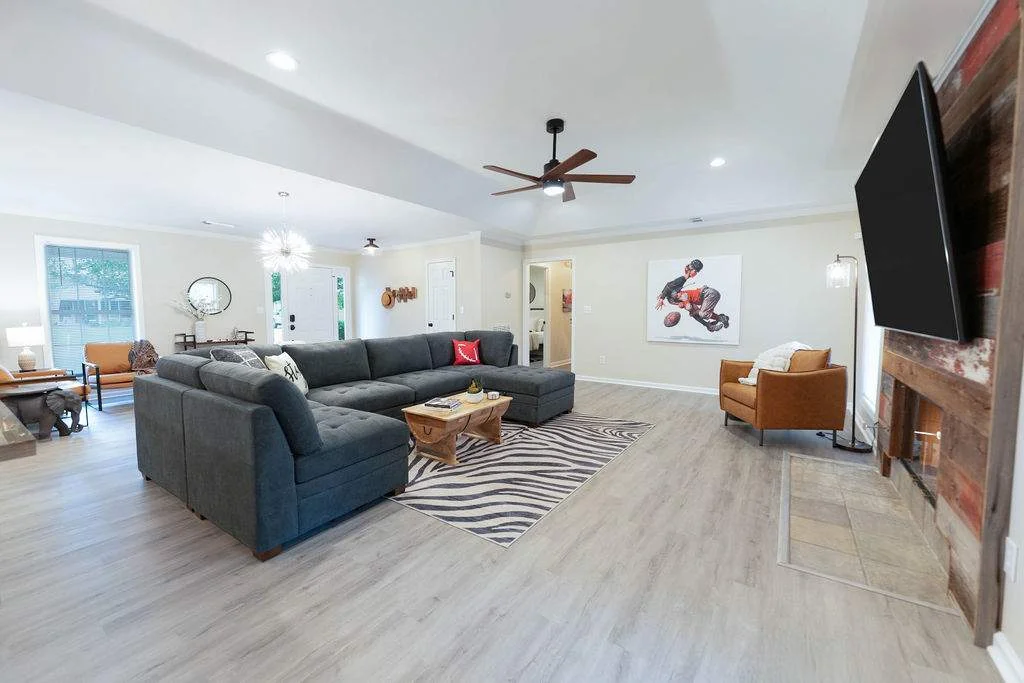
Family room · Crimson Retreat
Step 9: How Do Local Events Change Your Pricing Strategy?
Event-driven pricing means raising rates and minimum stays on dates when a local draw pushes demand far above normal. Tuscaloosa is the clearest example in our markets. An AirDNA analysis of 2026 home-game weekends, reported by Travel and Tour World, found 79.3% occupancy and a $642 average daily rate across an average of 1,027 available listings.
The same comparison found home-game weekend ADR 66.7% higher than non-game weekends, with revenue per available rental up 454.8%. A static rate card cannot capture a swing like that. A tool with no event override may only partly capture it.
Our markets each have their own calendar: Smoky Mountain fall foliage near Hazy Bear Hollow in Sevierville, festival weekends in Savannah, Arcada Theatre concert nights in St. Charles near The Fox Den, and Gulf Coast summer weeks in Port St. Joe. For Crimson Retreat, which sleeps 8 with a private pool and pickleball court, game weekends are the dates we protect first.
Always confirm the current season's schedule with the organizer, then lock in overrides.
Step 10: Is Dynamic Pricing Legal, and What About Taxes?
Dynamic pricing is generally legal, but rate changes sit inside local rules on taxes and permits. Price-gouging rules during declared emergencies apply too. Rules vary by city and county as well as by state, so verify the current requirements with your local government before you set a ceiling for emergency or disaster periods.
Lodging tax applies to your total rate no matter how it is calculated. In Tuscaloosa, the City levies a lodging tax of 11% within city limits. In the police jurisdiction, the rate is 5.5% for stays under 180 days. Payments are due monthly by the 20th of the following month, according to the City of Tuscaloosa. Confirm current rates and filing methods on the city's site.
Higher rates mean higher tax collected, so build that into your pricing and statements. Speak with a tax professional or attorney for decisions specific to your situation, and check each market's permit and zoning rules before you list.
Step 11: How Does LuxeSleeps Handle Dynamic Pricing for Owners?
Revenue management at LuxeSleeps means we adjust pricing daily to market. We also make the judgment calls software cannot. These cover minimum stays, gap-night strategy, event overrides, and channel mix across 15+ channels including Expedia, Trip Advisor, and other major booking sites.
Software suggests; we manage. A tool will not know that a concert is selling out downtown or that a bunkroom home suits a reunion weekend. Our owners also get an owner portal and monthly statements, so pricing is judged on profit rather than nightly rate alone.
The track record behind that approach is strong. Guests rate the homes we manage an average of 5 out of 5 across 190 reviews. We have hosted 2,300+ stays with a median reply time of 14 minutes. If you would rather co-manage, we also offer that, so you keep control of pricing decisions and share the workload.
Our property management page outlines the full-service model, and the owner-first approach means no hidden fees and no extensive contracts. We do not publish a fee percentage here; the industry range for full-service management is commonly cited at 15% to 30% of gross booking revenue, so ask any manager exactly what is included.
Frequently Asked Questions
What is the 75-55 rule for short-term rentals?
There is no official rule by that name, and we do not rely on it for pricing. Set your price using your costs and your comp set. Then bring in your demand data and test the results against RevPAR.
Can hotels do dynamic pricing?
Yes. Hotels and airlines pioneered demand-based pricing, adjusting rates by season and booking pace. Capacity guided their changes too. Vacation rental tools apply the same logic to individual homes.
What is the average vacation rental management fee?
Full-service short-term rental management commonly ranges from 15% to 30% of gross booking revenue, with co-hosting arrangements usually lower at about 10% to 18%. What the fee includes matters more than the percentage. LuxeSleeps offers no hidden fees and no extensive contracts; ask for the specifics of your property.
Do airlines use dynamic pricing?
Yes. Airlines raise and lower fares based on demand and time to departure. Remaining seats count as well. Your nightly rate follows the same principle, with the lead time and booking window as key signals.
What is the best dynamic pricing software for vacation rental hosts?
It depends on your listing count and channels. Your available time matters too. Compare control over floors and ceilings, integrations, comp set quality, and fee structure, and use a free trial to test recommendations. If you prefer not to run a tool yourself, LuxeSleeps adjusts pricing daily across 15+ channels for the homes we manage.
Does dynamic pricing actually increase vacation rental revenue?
Often, yes. A 2026 study of 541 listings found an average 36.3% gross revenue increase (Your.Rentals / PriceLabs), though your results depend on market and settings. Measure it against your own baseline.
How often should vacation rental prices be updated?
Daily is the common standard for automated tools, with weekly human review of event dates and gaps. Last-minute dates deserve the closest attention.
Conclusion: Is Dynamic Pricing for Vacation Rentals Worth It?
Dynamic pricing for vacation rentals is worth it for most active hosts, because the published revenue gains comfortably exceed typical software costs, provided you set honest floors, ceilings, and minimum stays and audit event dates. Treat every vendor figure as an upper bound and measure your own RevPAR.
Your next step is simple: record 12 months of baseline numbers and configure limits. Then compare after 90 days. In 2026 the tools are good, but the owners who win are the ones who review them. If you want that handled for you, LuxeSleeps offers Revenue Management & Dynamic Pricing that adjusts rates daily and reports profit every month.

A square canvas sign mounted on a white paneled wall displays a circular nighttime beach scene with palm trees, a full moon over calm ocean waves, and a sandy shore. The circular border features sea life including a sea turtle, jellyfish, starfish, seahorse, and fish, with "SAVANNAH BREEZE" lettered in silver around the design. · Savannah Breeze
To see pricing in practice, Savannah Breeze sleeps 6 across 3 bedrooms, and the hot tub is a draw on shoulder-season weekends. Check availability here.
Written by Dave Smith, Owner & Operator at LuxeSleeps
Content powered by inkSTR.co