Vacation Rental Startup Costs: A Step-by-Step Budget Guide
Vacation rental startup costs go beyond furniture. Use this step-by-step budget guide to plan permits, insurance, taxes and reserves before launch.
Vacation rental startup costs fall into four buckets: getting control of the property, furnishing and setting it up, covering permits and insurance, and holding a cash reserve until bookings arrive. Investors usually budget the first two and miss the last two. At LuxeSleeps, we manage 9 short-term rentals, and this guide sequences each bucket with ranges you can drop into a spreadsheet.
Key Takeaways
- Startup costs for a short-term rental split into property control, furnishing and setup, compliance and insurance, and a pre-revenue cash reserve.
- iGMS's 2026 hosting guide estimates $5,000 to $15,000 to launch a one- or two-bedroom home you already own or lease, excluding the purchase.
- Tuscaloosa requires a city business license before you operate and charges 11% lodging tax inside city limits; Geneva, IL has its own rules, so confirm them before you buy furniture.
- Furniture and appliances are generally depreciated. Section 179 and bonus depreciation may let you deduct them faster, and so may the de minimis safe harbor. Confirm the details with a CPA.
- Plan at least six months of operating costs. A reasonable planning assumption for a two- to three-bedroom home works out to about $1,100 a month.
A startup budget for a short-term rental is the full cash requirement from the day you take control of a home to the day it pays its own bills. Most guides cover only the tax half or only the furnishing half. This one puts every cost in the order you will actually pay it.
We have hosted 2,300+ stays, and the same mistake repeats: owners price the couch and forget the carry. Mortgage or rent and utilities can come due before the first guest books. Insurance and a license can too. If you are looking at Geneva, IL, a Fox River Valley market we serve for management and investment, use the figures below as a template and replace them with local quotes.
The ranges here come from iGMS's national guide or from planning estimates for a two- to three-bedroom home. We have no Geneva-specific figures, so treat every number as a planning input, not a quote. Check the scope of each total, since some include the property purchase and some do not.
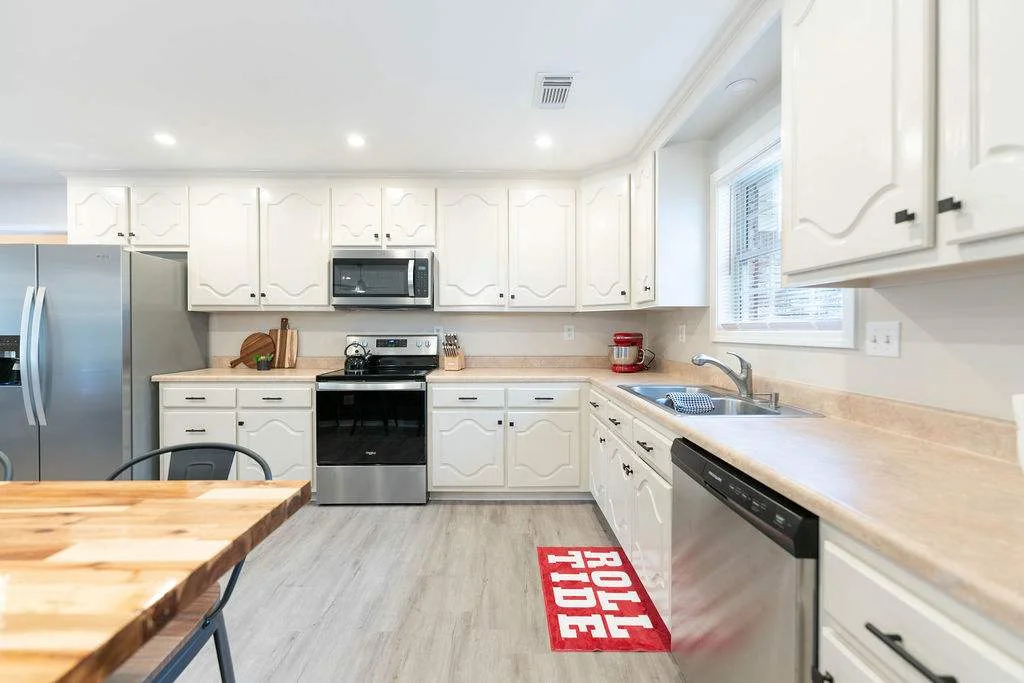
Fully stocked kitchen · Crimson Retreat
Step 1: Choose How You Will Control the Property
Property control is the legal route that lets you host paying guests in a home. You buy a home or convert one you already own, or you lease from a landlord and sublet short term, a model called rental arbitrage. The route you pick sets your largest cost line, so decide it before pricing a single sofa.
| Path | Cash needed up front | Biggest risk | Best for |
|---|---|---|---|
| Buy | Down payment, closing costs, make-ready work | Mortgage carry if bookings lag | Investors with capital and a long horizon |
| Convert a home you own | Furnishing, setup, licensing | Wear on a personal asset | Second-home owners and heirs |
| Rental arbitrage | Security deposit, first month's rent, furnishing | Landlord can end the lease | Operators testing a market |
Purchase price swamps every other line, so price it with current local figures and keep purchase price and down payment on separate lines. Closing costs and make-ready spend each get their own line too.
Rental arbitrage lowers the entry price but moves the risk onto your lease. Get written landlord permission that names short-term use before you sign. Converting a long-term rental to a short-term one often lifts gross revenue, though operating costs and management work rise too. If you are weighing a purchase, our investor support covers BRRRR, fix-and-flips, wholesaling, and seller financing.
Step 2: Build the Vacation Rental Startup Costs Budget
An itemized launch budget lists every cost you pay before the first guest checks in, plus the reserve that covers expenses until revenue arrives. Build it line by line and label what each total includes; keep a low and a high figure for every row.
| Budget line | Typical range | Scope and source |
|---|---|---|
| Furnishing and staging | $3,500 to $10,000+ | One- or two-bedroom home (iGMS) |
| Furniture, appliances, linens, decor | $8,000 to $12,000 | Two- to three-bedroom home (planning estimate) |
| Photography only | $300 to $800 | Professional shoot (iGMS) |
| Photography, listing creation, basic renovations | $2,000 to $3,000 | Bundled setup (planning estimate) |
| Licensing | $50 to $2,500 | Varies by city (iGMS) |
| Insurance | $1,200 to $2,000 per year | Short-term rental policy (planning estimate) |
| Utility deposits and connections | $800 to $1,200 | Single-market planning estimate |
| Initial supplies and deep clean | $300 to $1,200 | First stock-up (iGMS) |
The iGMS launch total excludes the property itself, while the planning estimates cover a different scope, so compare them only after you match the scope. Guesty also publishes a 2026 startup breakdown that works as a broad national benchmark.
Our view: budget toward the high end of furnishing. It is the line that grows once you start counting beds and linen sets. Guest-proof replacements add to it.
Step 3: Furnish for Guests and Photos, Not Just Looks
Furnishing a vacation rental means equipping each space for the number of guests it sleeps, not decorating a home for one household. Sleeping capacity drives the budget: every extra bed needs a mattress and protector. It also needs two or three linen sets so a turnover never waits on the dryer.
Our Sevierville cabin shows how capacity shapes spend. The 3-bedroom cabin sleeps 11 because of a queen-over-queen bunk room and a pullout sofa. A downstairs game room with air hockey and a Golden Tee arcade game adds more space. Each of those lines was a deliberate purchase, not an afterthought.
At LuxeSleeps, our co-owner Karen brings the design background, and we treat design as a revenue lever. If you want help, our interior design and staging service plans for durability and photography.
- Spend more on: mattresses, sofas, bedding, and the two or three rooms that appear first in your listing photos.
- Spend less on: small decor and anything a guest could pack in a suitcase.
Be honest about what the home lacks. The Fox Den in St. Charles has a kitchenette with a sink, microwave, full fridge, and hot plate, and it has no stove, oven, dishwasher, or washer and dryer. That trimmed the appliance budget, and the listing says so plainly, which protects reviews. You can see it at The Fox Den.
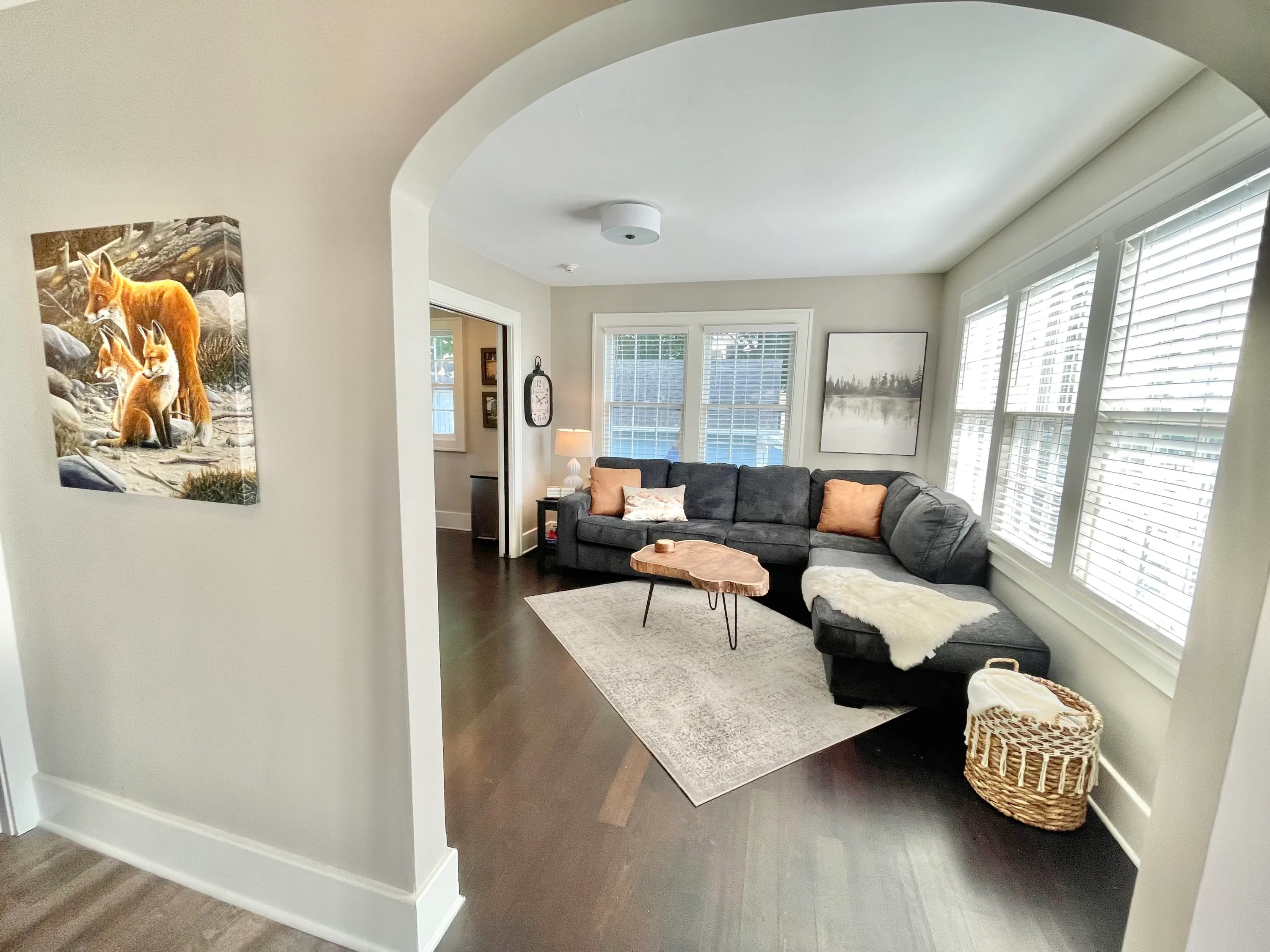
First Floor Entry into Family Room · The Fox Den
Step 4: Budget for Permits, Insurance, and Legal Setup
Compliance spending is the money you pay to operate legally, such as local licenses and lodging tax registration. Inspections and insurance count too, as does a business entity if you choose one. Order matters here. Confirm the rules before you buy furniture, because a zoning ban or an HOA ban makes every other line worthless.
Permits, licenses, and lodging tax
Tuscaloosa illustrates the full path. The City's short-term rental page says eligible properties apply through the Revenue Division and licenses renew annually. The license cost depends on several factors rather than a flat price. The license page sets a February 15 postmark deadline for renewal payment.
Tuscaloosa's lodging tax is 11% inside city limits and 5.5% in the police jurisdiction. It is due monthly by the 20th of the following month, and the municipal code adds a 10% penalty for late payment. It also requires a single-family dwelling to be inspected by a licensed home inspector or another person the chief building official approves.
For Geneva, IL, call the City of Geneva before you buy and ask about zoning, licensing or registration, inspections, local and state lodging tax registration, and any HOA restrictions. Fees and rules change, so get the current schedule in writing.
LLC and insurance
An LLC is a liability-separation structure, not a hosting requirement. To form one in Illinois, you file with the state's business filing office and keep up annual filings, paying the fee the state sets. Ask an attorney whether it fits your plan, and check with your lender before moving a mortgaged property into one.
Short-term rental insurance is a host or STR-specific policy that covers paid guest stays. Expect roughly $1,200 to $2,000 per year as a planning range. Standard homeowner policies often exclude paid stays, so ask your agent directly and read platform coverage limits before relying on them.
Step 5: Pick Software, Pricing, and a Management Model
Short-term rental software is the stack that syncs calendars across channels and automates guest messages. It also sets nightly prices and produces owner statements. Budget about $50 a month for it, which is small next to the revenue it protects.
For a hybrid operation that mixes nightly and mid-term stays, choose by criteria. Look for two-way calendar sync, one inbox for all channels, separate nightly and monthly rate rules, and clean income and expense reporting. Skip any tool that cannot handle a 30-day stay without manual workarounds.
Pricing is the lever most new owners underinvest in. A 2026 study of 541 Airbnb listings in 34 countries, published by Your.Rentals and PriceLabs, found dynamic pricing lifted gross revenue per unit by 36.3% on average. Results vary by market and property, and our dynamic pricing guide shows the process step by step.
Management is the other fork. Fees are usually a percentage of gross booking revenue, and co-hosting costs less than full-service management. We do not quote a percentage here. LuxeSleeps runs short-term and mid-term rental management with daily pricing adjusted to market, 15+ channels, an owner portal, and monthly statements showing gross rental income, total expenses, and profit, with no hidden fees and no extensive contracts. Co-management suits owners who want to keep decisions.
Step 6: Sort Costs for Tax: Expense, Capitalize, or Depreciate
Tax treatment of startup costs decides whether a dollar is deducted this year or recovered over several years, through depreciation or an addition to the property's cost basis. This is general information, not tax advice; a CPA should confirm every line.
Furniture and appliances are generally depreciated as business property. Section 179 and bonus depreciation can accelerate that deduction. The rules and limits change, so confirm the current year's figures. IRS Publication 946 covers depreciation, and IRS Publication 527 covers residential rental property.
The de minimis safe harbor is a tax rule that lets you deduct low-cost items immediately instead of depreciating them. The per-item limit is set by the IRS, so confirm the current number. Closing costs on a purchase are generally added to basis rather than deducted. Costs you pay before the rental is available for rent can follow different rules than later operating costs.
Most rental income and expenses are reported on Schedule E. Keep dated receipts, because the date the property is placed in service affects when depreciation starts.
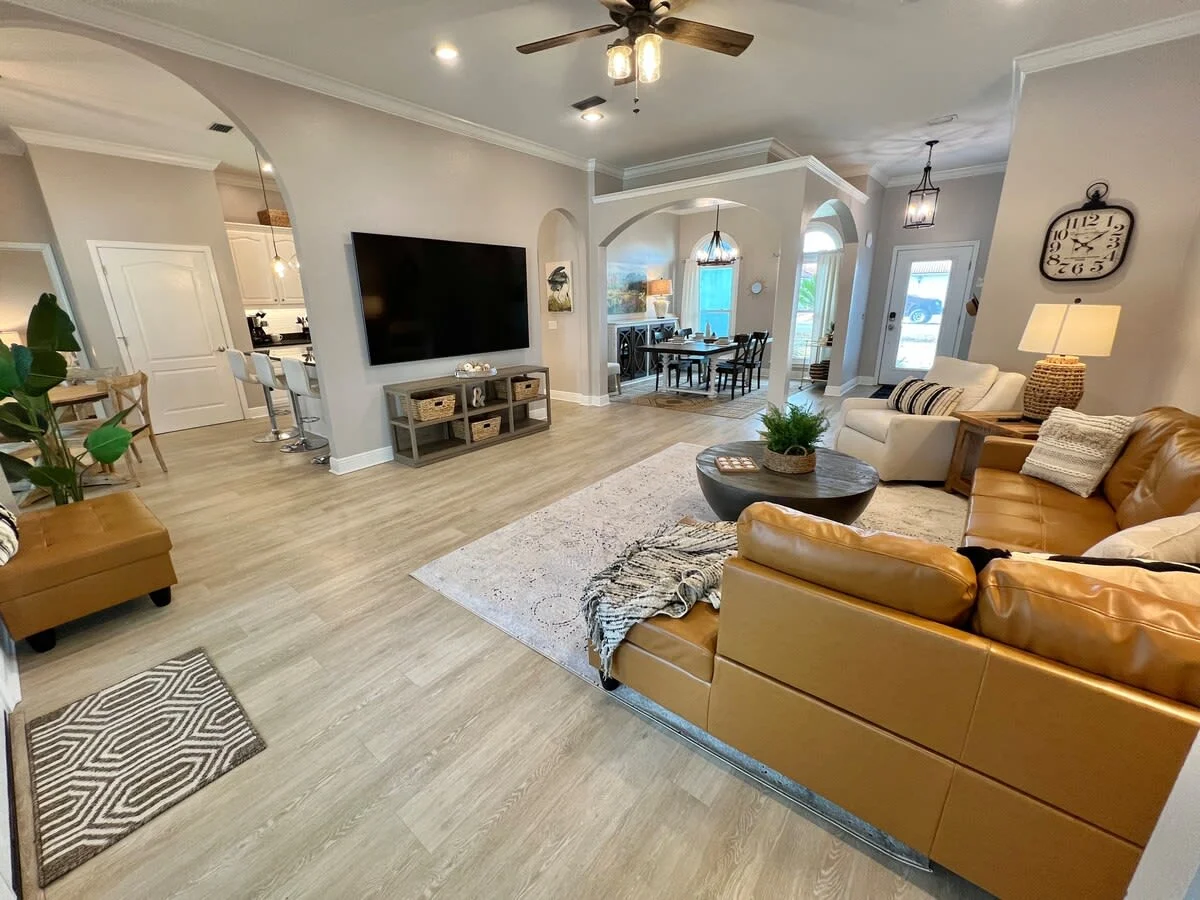
Family room · Nautilus Escape
Step 7: Run the Worked Example and Cash-on-Cash Math
Cash-on-cash return is annual net cash flow divided by the total cash you invested. Run it before you commit, using a budget that includes the reserve.
The hypothetical example below converts an owned three-bedroom home. It combines the ranges from Step 2 with a six-month operating assumption, so it is illustrative rather than precise. The assumptions are utilities at $150 a month, cleaning at $75 for eight turnovers a month, software at $50, restocking at $100, and maintenance at $200.
| Line | Low | High |
|---|---|---|
| Furniture, appliances, linens, decor | $8,000 | $12,000 |
| Photography, listing, basic renovations | $2,000 | $3,000 |
| Licensing | $50 | $2,500 |
| First-year insurance | $1,200 | $2,000 |
| Utility deposits | $800 | $1,200 |
| Supplies and deep clean | $300 | $1,200 |
| Six months of operating costs | $6,600 | $6,600 |
| Total cash before revenue stabilizes | $18,950 | $28,500 |
The total excludes mortgage or rent, lodging tax, management fees, vacancy, and any purchase. Illustrative math, not a forecast: if you invested $20,000 and kept $5,000 a year in net cash flow, your cash-on-cash return is 25% and payback takes four years.
Budget lines investors miss
- Pre-launch carry: mortgage or rent and utilities before the first booking.
- Lodging tax timing: monthly remittance means you front the cash if you spend guest payments elsewhere.
- Replacement reserve: we inspect monthly and quarterly and deep clean quarterly at LuxeSleeps, and a reserve pays for what those visits find.
- Annual renewals: licenses and insurance renew yearly, and software bills monthly.
Quick-Reference Summary: The Seven Steps
- Choose your control path: buy or convert a home you own, or use rental arbitrage with written landlord permission.
- Build an itemized budget with a low and high figure for each line and the scope labeled.
- Furnish for sleeping capacity and photos, and disclose limits such as a kitchenette.
- Confirm permits, lodging tax, inspections, entity choice, and insurance before you buy furniture.
- Pick software that handles nightly and mid-term stays, and decide whether to self-manage or hire a co-host or full-service manager.
- Sort costs into expense, capitalize, or depreciate, and review them with a CPA.
- Add a six-month reserve and run cash-on-cash math before you commit.
Frequently Asked Questions
How much does it cost to start a vacation rental?
It depends on whether you buy. iGMS estimates $5,000 to $15,000 to prepare a one- or two-bedroom home you already own or lease. Buying adds the full property price, which dwarfs setup costs, so price it with current local figures.
Can you deduct startup expenses for a vacation rental?
Some can be deducted, and others are capitalized or depreciated. Furniture and appliances are generally depreciated. Section 179 and bonus depreciation are possible accelerators, as is the de minimis safe harbor. Ask a CPA to classify each line.
Do I need an LLC before buying a vacation rental?
No law requires one for hosting. An LLC separates business liability from personal assets, and in Illinois you file with the state's business filing office. Speak with an attorney and your lender first.
What permits are required for short-term rentals in Geneva, Illinois?
Requirements come from the City of Geneva and can change. Ask about zoning, licensing or registration, inspections, lodging tax registration, and HOA rules before you spend on setup, and get the answers in writing.
Who can manage my vacation rental in Geneva, IL?
LuxeSleeps manages short-term and mid-term rentals for owners and serves Geneva, IL as a management and investment market. We offer 24/7 guest support and daily pricing adjusted to market. Owners get a portal and monthly owner statements. Compare any manager on fee transparency and contract length. Ask about reporting too.
How long does it take to break even on a vacation rental?
Divide total cash invested by annual net cash flow after all expenses. The result varies by market and season, and the management model matters too. Event-driven demand can swing it. Use low and high cases rather than a single optimistic number.
Conclusion: Plan the Reserve, Not Just the Furniture
Vacation rental startup costs are easiest to control when you budget in order: pick the control path, itemize setup, confirm compliance, choose your tools, classify the tax treatment, and fund a six-month reserve. The lines investors miss are rarely the couch. They are the carry and the renewals.
In 2026, rules, tax limits, and local fee schedules keep changing, so re-check the City, the IRS guidance, and your CPA before you spend. Then run the cash-on-cash math with your own numbers.
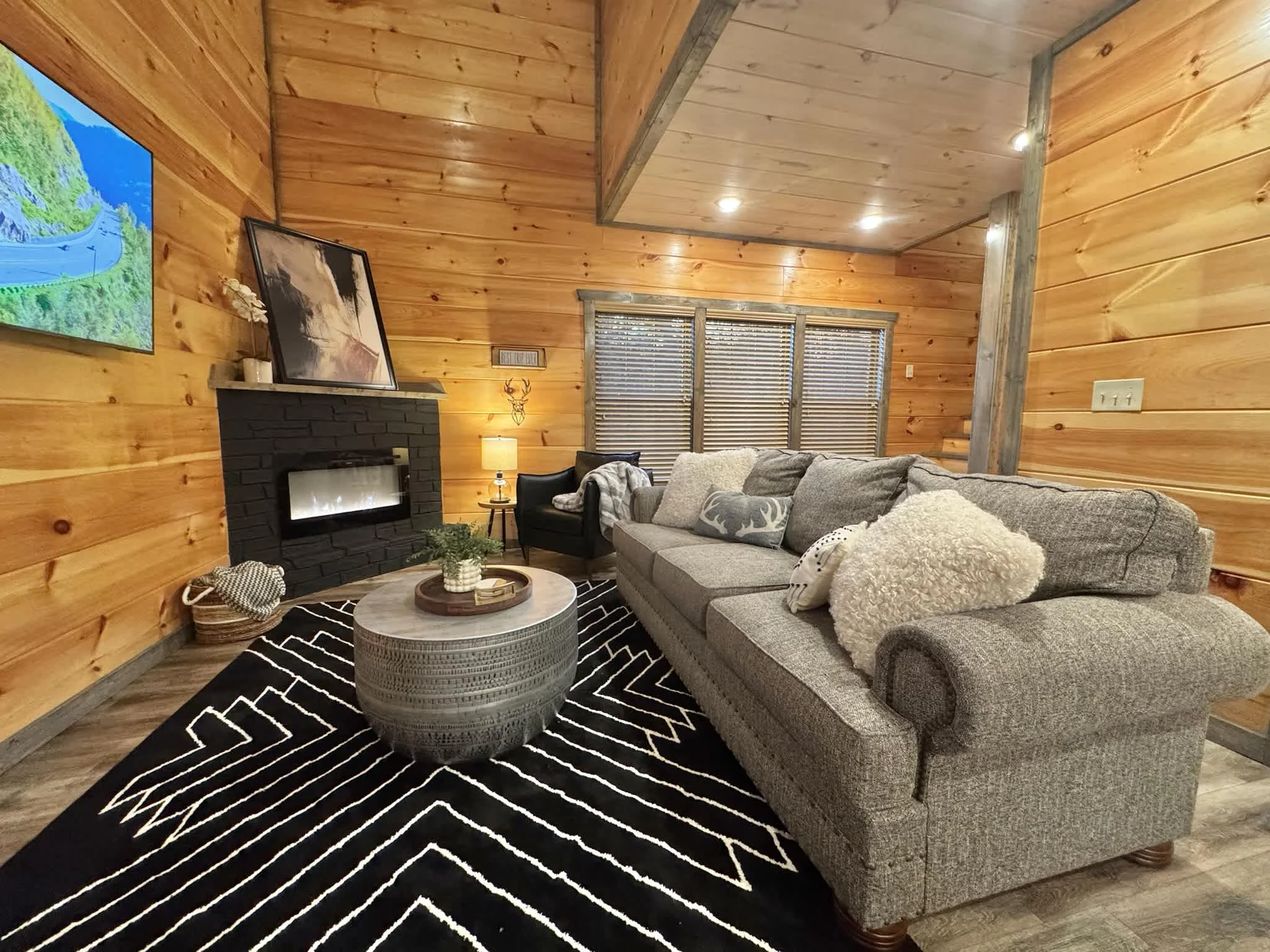
Family room · Hazy Bear Hollow
If you want to see where furnishing dollars show up in a finished home, our Sevierville cabin is a good place to look, starting with the downstairs game room. Owners who want a second set of eyes on a startup budget can talk with LuxeSleeps.
Written by Dave Smith, Owner & Operator at LuxeSleeps
Content powered by inkSTR.co