Airbnb vs Vrbo for Owners: Which Platform Pays You More?
Airbnb vs Vrbo for owners in 2026: compare host fees, net payout math, guest mix, and dual-listing risks to pick the platform that earns you more.
For most owners, the best answer in the Airbnb vs Vrbo for owners debate is to list on both. Vrbo suits whole-home family and group bookings at a lower commission when you connect through property management software. At LuxeSleeps, we manage 9 short-term rentals and distribute listings across 15+ channels, so we see how each platform behaves on real calendars. List on only one if your property type or your time forces the choice.
Key Takeaways
- Whole-home properties for families and groups tend to fit Vrbo, urban suites and shorter stays tend to fit Airbnb, and most properties earn more on both.
- Occupancy and nightly rate move your income more than the fee gap, so run net payout math on your own numbers before choosing.
- Dual listing works only with two-way calendar sync, ideally through a channel manager or property management software, plus a same-day buffer.
- You stay responsible for permits and occupancy tax on both platforms; whether a platform collects tax for you depends on the jurisdiction.
- Fee schedules are date-sensitive in 2026, so confirm current rates in your own accounts before building a pro forma.
Choosing between these two platforms used to be a branding decision.
This guide covers fee structures, a worked payout example, guest mix, property fit, protection and cancellation differences, tax duties, and a dual-listing playbook. We write from the operator's seat. Our homes range from a beach house that sleeps 16 to a St. Paul duplex, and the winning platform changes from home to home.
What Do Airbnb and Vrbo Charge Owners in 2026?
StayKit notes that Airbnb standardized that flat rate in late 2026, replacing earlier ranges.
Vrbo works differently. In some regions, such as Europe, Australia, or New Zealand, the fee is 12% to 15%. If you list directly instead of through software, Hostfully describes the arrangement as that 5% commission plus a 3% payment-processing fee, about 8% in effective host charges.
| Host fee | 15.5% host-only service fee for most hosts | 5% booking fee for software-connected hosts |
| Payment processing | Included in the single fee | About 3% added on direct listings, roughly 8% effective |
| Guest service fee | None under the host-only model | Typically 6% to 15% of the subtotal, paid by the guest |
| Regional variation | Confirm in your account | 12% to 15% in some regions outside the U.S. |
Fee schedules move. A Vrbo commission change has been reported for late October 2026, so treat every figure here as a dated snapshot. Confirm the rate in your Vrbo Owner Dashboard and your Airbnb account before you build a pro forma.
Does Vrbo Have Hidden Fees?
A hidden fee is a charge a seller does not display until late in the booking process. Vrbo does not hide its host commission; the surprise is how the pieces stack.
A Vrbo nightly rate that matches your Airbnb rate therefore looks more expensive to the traveler. Compare the guest's total price on both sites before you set rates.
The break-even is simple division: divide the annual fee by your commission rate to find the booking revenue at which the subscription starts to win. Below that revenue, pay-per-booking costs less. Above it, the subscription does. Vrbo changes the subscription price, so read the current annual figure in your Owner Dashboard and confirm whether Vrbo or your software handles payment processing, because that line belongs to someone either way.
Airbnb vs Vrbo for Owners: What Does Net Payout Look Like?
Net payout is the money that reaches you after platform fees on a booking, and it is the number that covers your mortgage. Take a $1,500 booking subtotal as a round-number illustration and apply the fee rates from the table above. Cleaning fees and lodging taxes are left out because they pass through to guests and tax authorities.
But a fee gap does not equal an income gap.
Pricing mistakes usually cost more than the fee difference. At LuxeSleeps, we adjust pricing daily because gap nights between bookings are where owners quietly lose the most revenue, and our guide to dynamic pricing for vacation rentals walks through the method. Run the same math on your own calendar: gross by platform, multiplied by the payout rate, then minus your cleaning and management costs.
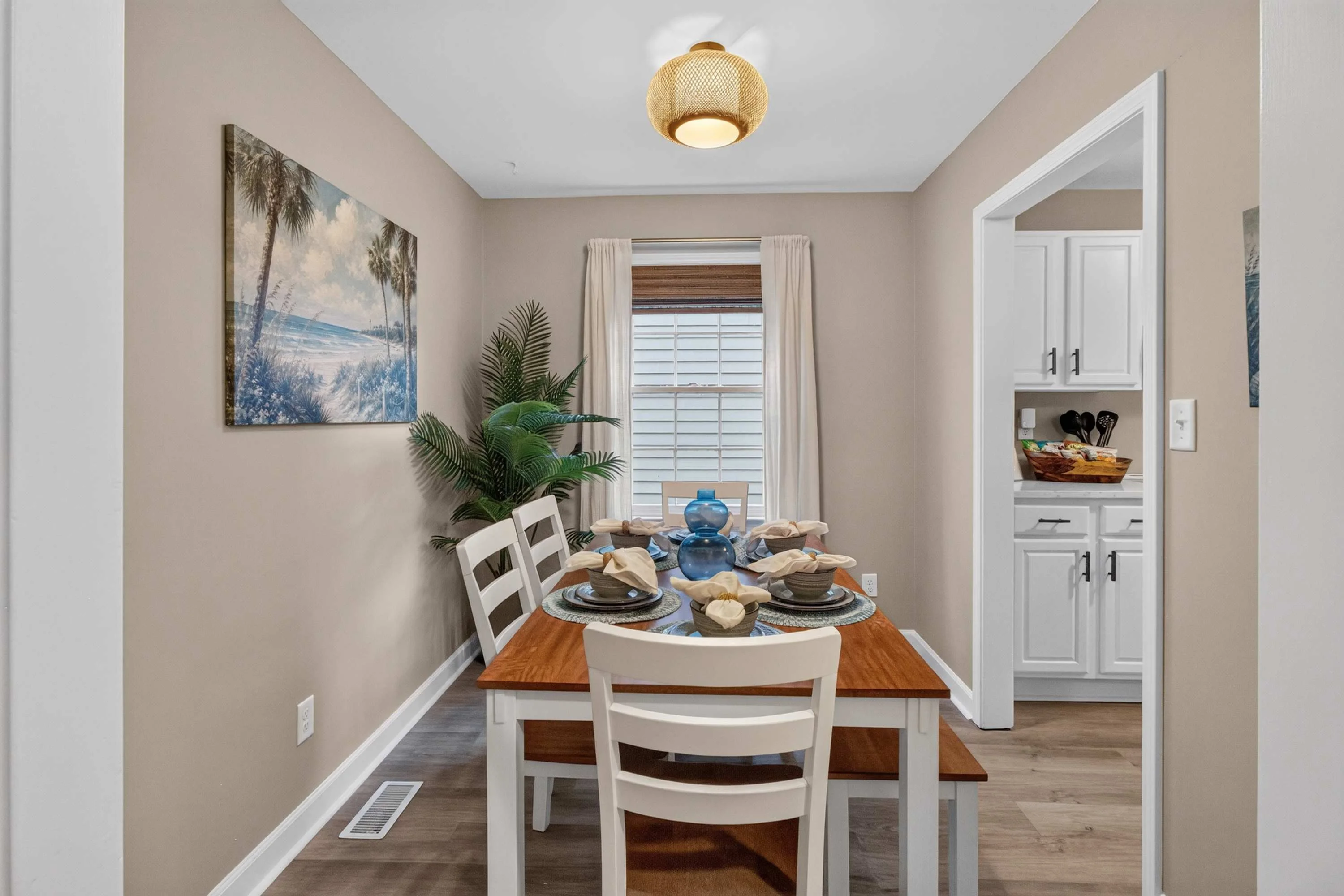
A bright dining room with a wooden-top table and white ladder-back chairs set for four, featuring blue glass decor, a woven pendant light, and a coastal palm-tree painting on the wall. A doorway on the right opens into a kitchen with white cabinets and dark utensils, while a potted palm sits beside the window with cream curtains. · Savannah Breeze
Is Vrbo More Popular Than Airbnb?
Platform popularity depends on what you measure. Inventory breadth and traveler traffic can point one way, while whole-home bookings point another. Airbnb carries a broader accommodation mix of spare rooms, suites, and whole homes, which draws solo travelers and couples looking for city stays. Vrbo concentrates on whole-home vacation rentals and leans toward families and groups booking longer trips.
We do not have platform-level traffic numbers we can verify, and you should distrust any article that quotes a precise market share without a source. What we see across our portfolio is a fit pattern. A house that sleeps 16, like Seaside Serenity in Port St. Joe, matches the family-and-group audience Vrbo courts. A three-bedroom downtown suite matches the Airbnb crowd.
Neither platform replaces the other, and the owners who treat them as rivals usually leave bookings on the table.
Is Airbnb Declining in Popularity?
A popularity decline means fewer travelers choosing a platform over time, and the visible change in 2026 sits on the owner side, not the traveler side.
The homesharing industry has grown rapidly since Airbnb.com was established in 2008, according to Mashvisor. That growth means more competing listings in most markets. Owners feel that crowding as pressure on rates and visibility, which is easy to mistake for fading demand.
Reduce your dependence on it instead. List on Vrbo for whole-home demand, then add other channels and build direct bookings alongside them. We market across 15+ channels for exactly this reason, so no single platform's fee change can reset our owners' income.
Which Platform Fits Your Property Type and Market?
Platform-property fit is the match between who books a channel and what your home offers. Compact urban units suit Airbnb's broader traveler mix.
| Property or market | Lead with | Add second | Why |
|---|---|---|---|
| Second home with owner stays | Whichever you list first | The other | Block your own dates in one master calendar |
Our own homes show the pattern. Hazy Bear Hollow sleeps 11 with a game room and hot tub, about 9.3 miles from Dollywood, and leans toward family and group travelers. Savannah Row has 3 bedrooms for 6 guests, about 0.4 miles from Forsyth Park, and fits the walkable city-weekend crowd.
Visibility on both platforms still depends on photos and presentation. Owner Karen's design background shapes how our homes read in listings, and our interior design and staging work is built around guest experience and booking performance.
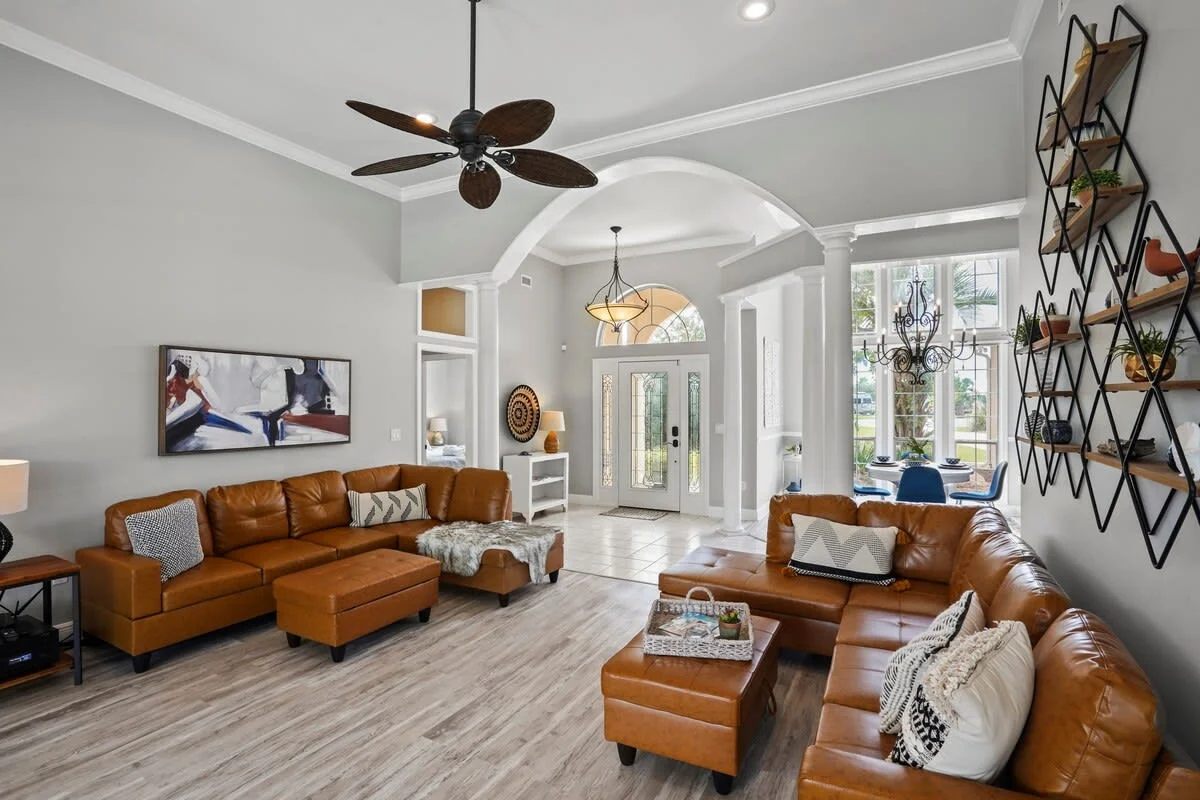
A bright, spacious living room with two cognac leather sectional sofas arranged around tan leather ottomans, a large abstract wall painting, and a ceiling fan with dark wooden blades. An arched entryway with a glass-paneled front door and a chandelier leads to a dining area with blue chairs beside a wall of windows, and open black metal wall shelving decorated with plants sits on the right. · Seaside Serenity
How Do Guest Screening, Damage Protection, and Cancellations Compare?
Host protection refers to the screening tools and damage coverage a platform applies on your behalf, along with its cancellation rules. Each platform publishes its own terms. Airbnb offers a host protection program branded AirCover, and Vrbo publishes its own host protections. We have no verified coverage figures to compare, so read the exclusions on both, since coverage limits and claim windows change, and no platform program replaces your own short-term rental insurance.
Screening matters more than coverage. Both platforms use verified accounts and review histories, but your house rules do the heavy lifting. At Hazy Bear Hollow the booking guest must be 25 or older and present for the entire stay, which narrows who can book before the first message arrives. Add a noise policy and an occupancy cap that matches your actual sleeping arrangements.
Both platforms let you choose among cancellation policy tiers. Use a stricter tier for peak weekends and holidays and a more flexible one for slow shoulder periods. Strict terms protect revenue but can lower conversion, so test them. Instant Book speeds up conversion; pair it with guest requirements so you keep some screening in place.
Who Collects Occupancy Taxes and When Do You Get Paid?
Occupancy tax, also called lodging tax or transient occupancy tax, is a per-stay tax on short-term accommodations, and in most jurisdictions the rate ranges from 5% to 17% of gross revenue. Whether Airbnb or Vrbo collects and remits it for you depends on the jurisdiction. Neither platform removes your duty to hold the right permits and registrations, so verify with your local tax office.
Local rules show how specific this gets. The City of Tuscaloosa, one of our markets, levies lodging tax of 11% within city limits and 5.5% in the police jurisdiction. This applies to stays under 180 days, with payments due monthly by the 20th of the following month. A platform that collects tax on one channel will not collect it on your direct bookings, so you handle those yourself.
Payout timing differs by platform and by account settings, so read each payout schedule instead of assuming. Our monthly owner statements show gross rental income and total expenses across channels, with profit alongside. That spares you from rebuilding your tax picture from a pile of separate dashboards.
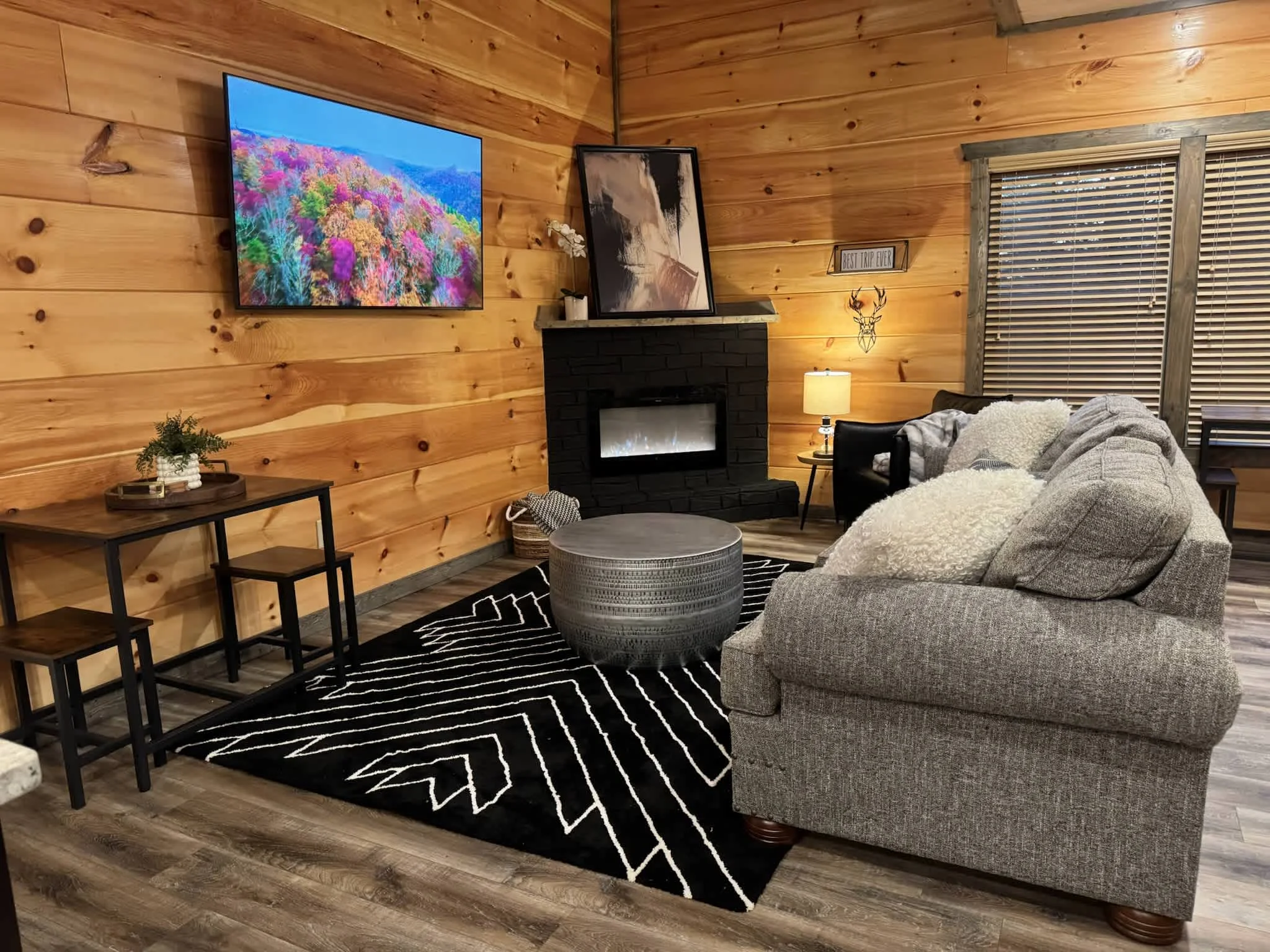
Family room · Hazy Bear Hollow
Should You List on Both Airbnb and Vrbo?
Dual listing means publishing one property on both platforms with calendars that update each other. It widens your reach and creates one serious risk: double bookings when a calendar lags. The fix is two-way calendar sync through a channel manager or property management software, plus a same-day buffer. A single master calendar for owner blocks completes it. Delayed calendar links are the usual cause, so confirm the sync interval of whatever tool you use.
- Create an owner account and complete identity and payout verification.
- Enter property details, sleeping arrangements, and house rules that match your other listing.
- Upload photos and write a description that matches what guests will find.
- Set nightly rates, minimum stays, fees, and the cancellation policy.
- Choose pay-per-booking or a subscription, where available, and confirm who handles payment processing.
- Connect your calendar through two-way sync and confirm your license and tax registration.
Budget time for verification and photo review, and use our vacation rental startup costs guide to plan setup spending.
Not every owner wants to run two inboxes. If you enjoy hosting but not the 2am messages or the pricing spreadsheet, a co-management arrangement with LuxeSleeps lets you keep the parts you like and hand off the parts that burn you out. Our property management team runs full-service listings across both platforms with 24/7 guest support and a 14 minute median reply time.
Frequently Asked Questions
Some hosts remain on a split-fee arrangement, so check the fee terms in your account. The rate in the table above is current as of 2026 but can change.
Vrbo's per-booking commission is lower for hosts connected through property management software, based on the figures above. Regional rates and direct-listing payment processing narrow the gap. Lower fees do not guarantee higher net income, because occupancy and nightly rate decide that.
Create an owner account, verify your identity and payouts, add property details and photos, set rates and a cancellation policy, choose a fee model, and connect your calendar. The step-by-step list above covers each stage. Confirm your local license before you publish.
Which platform is best for vacation rental owners?
LuxeSleeps manages and markets listings across 15+ channels, including Airbnb and Vrbo, and our recommendation is to lead with the platform that matches your guest. Vrbo suits large whole-home family and group stays, while Airbnb suits urban and shorter stays. Using both works best when your calendars sync cleanly. Your property type and market decide the final split, along with the time you have available.
Yes for most whole-home rentals, provided you use two-way calendar sync and a same-day buffer. Listing on one platform only makes sense if you cannot keep sync reliable or your property clearly suits a single audience.
No, either platform lets you self-manage. A manager or co-host becomes worth considering when messaging, pricing, turnovers, and tax filings across channels cost you more time or sleep than the fee. We offer full-service management and co-management with scope tailored to your needs, and we are transparent about costs with no hidden fees.
What Is the Smart Move for Owners in 2026?
Calendar discipline matters as well. Vrbo's commission is lower for software-connected hosts, Airbnb's reach is broader, and the owner who lists on both with synced calendars usually captures the most demand. Run the payout math on your own numbers, set house rules that screen guests, and confirm tax duties with your local office. Fee schedules will keep shifting through 2026 and beyond, so recheck your rates every quarter.

Pickleball, Pool and Games · Crimson Retreat
If you would rather own the property than run it, LuxeSleeps offers full-service short-term and mid-term rental management with no hidden fees and no extensive contracts. Not ready to hand over everything? Our co-management can be shaped around what you want to keep. Contact us through the site and tell us where your time is going.
Written by Dave Smith, Owner & Operator at LuxeSleeps
Content powered by inkSTR.co