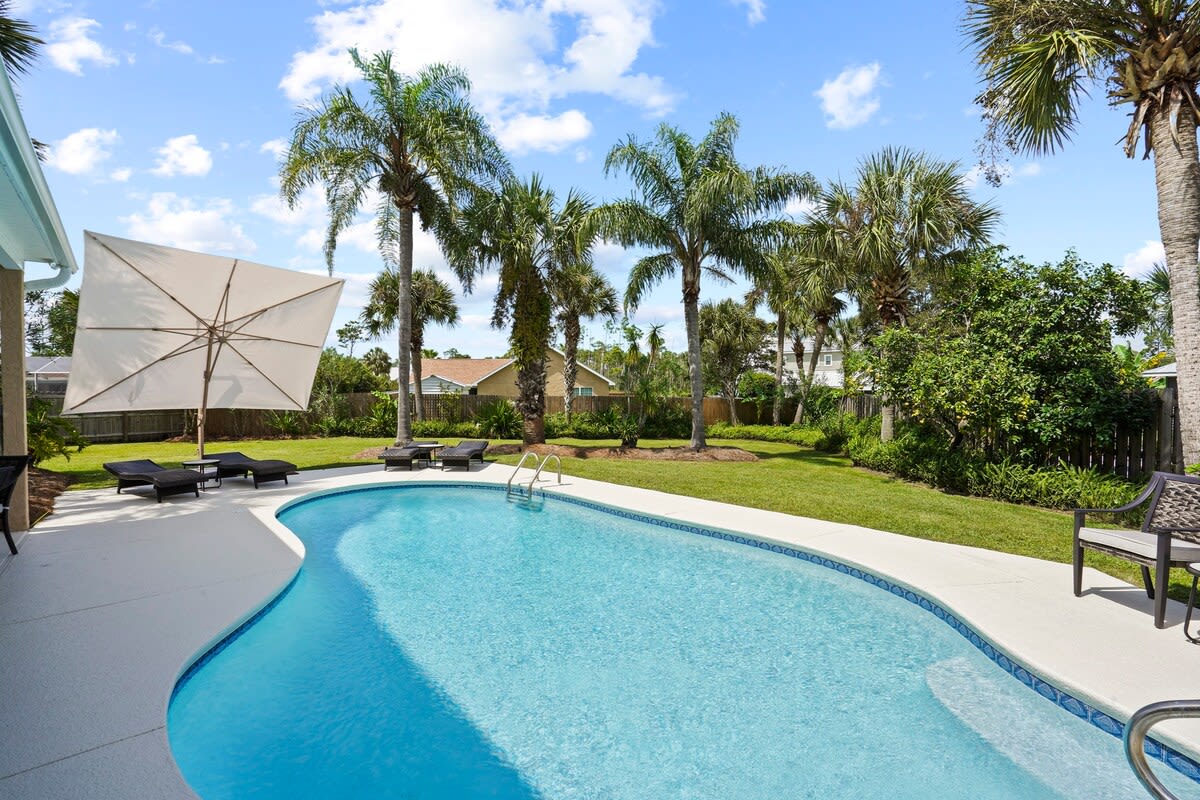
Short Term Rental Regulations Port St. Joe: Buyer Checklist
Port St. Joe short term rental regulations start with a city business license, zoning check, DBPR and tax registration. See the full buyer checklist.
Short term rental regulations in Port St. Joe require a city-issued business license, a zoning check on the exact parcel, and state and county registrations before you take your first guest. At LuxeSleeps, we manage rentals in Port St. Joe, so we walk owners through each of these steps before they close.
Key Takeaways
- The City of Port St. Joe says a city-issued business license is required to run a vacation rental, including businesses operated from home or online.
- Zoning comes first: confirm in writing that the parcel sits in an allowable district, because Code Enforcement reviews land use during the license application.
- Hotel and short-term-rental applicants must be registered with Florida DBPR, and the city points hosts to the Gulf County Tax Collector for the 5% Tourist Development Tax.
- HOA covenants, existing leases, lenders, and insurers can block rental income even when the city approves, so check them before your inspection period ends.
- Gulf County's licensing and inspection program is generally described as covering unincorporated areas, so confirm whether a parcel is inside city limits.
This guide is for first-time owners and out-of-state investors, and it also serves second-home buyers who need to know what permission looks like before they sign a contract. Rules change, so re-read the city's official business license page in 2026 right before you make an offer. The owners who struggle priced in rental income before confirming they were allowed to earn it.
Treat this as a checklist, not legal advice. Confirm each point with the named office or a Florida real estate attorney.
Who Sets Short Term Rental Regulations in Port St. Joe?
Short term rental regulation in Port St. Joe works in three layers: the City of Port St. Joe controls business licensing and land use inside city limits, Gulf County runs its own program in unincorporated areas, and the State of Florida sets lodging licensing and tax rules for every host. Your parcel's location decides which layer matters most.
A Port St. Joe mailing address does not settle that question. Nautilus Escape, for example, sits about 7.8 miles, roughly a 20-minute drive, from Historic Downtown Port St. Joe. Gaps like that are why we confirm jurisdiction parcel by parcel instead of trusting an address line. Gulf County's licensing and inspection program is generally described as covering unincorporated areas rather than city limits. Confirm the answer with both the city and the county before you buy.
State law adds a constraint. Florida Statutes, section 509.032 is the provision usually cited when local governments try to limit vacation rentals. The common summary is that it restricts newer local rules while older ones may still apply. Read the current text yourself, and ask a Florida real estate attorney how it applies to your address.
Neighboring communities such as Mexico Beach and Wewahitchka set their own rules, so a permit story you read about one town does not transfer. Start with the City of Port St. Joe's business license page, which is the official city statement on vacation rentals.
Is the Property You Want to Buy Zoned for a Vacation Rental?
Zoning for a short term rental is the land-use classification that decides whether paying guests can stay at a parcel. Port St. Joe tells hotel and short-term-rental applicants to verify an allowable zoning district before starting, and Code Enforcement reviews the proposed location and activity during the business license application.
Here is the catch: the city's page does not list which districts qualify or offer a parcel lookup. That leaves the work to you, and the answer needs to be in writing. Email the city with the parcel ID and ask for confirmation that a vacation rental is an allowed use at that address. Keep the reply with your closing file, because a verbal "that should be fine" will not help you if the license is later denied.
Questions to put in that email
- Which zoning district is the parcel in, and is a vacation rental allowed there?
- Does any spacing requirement between rentals, or a downtown overlay such as the Special Area Plan, apply to this parcel?
- If the seller already holds a license, does the use transfer to a new owner, or does the city treat it as a new application?
We do not quote a spacing distance here, because the city sets that number and it can change. If the city declines to answer in writing, treat that as information about your risk, and negotiate a zoning contingency into your contract.
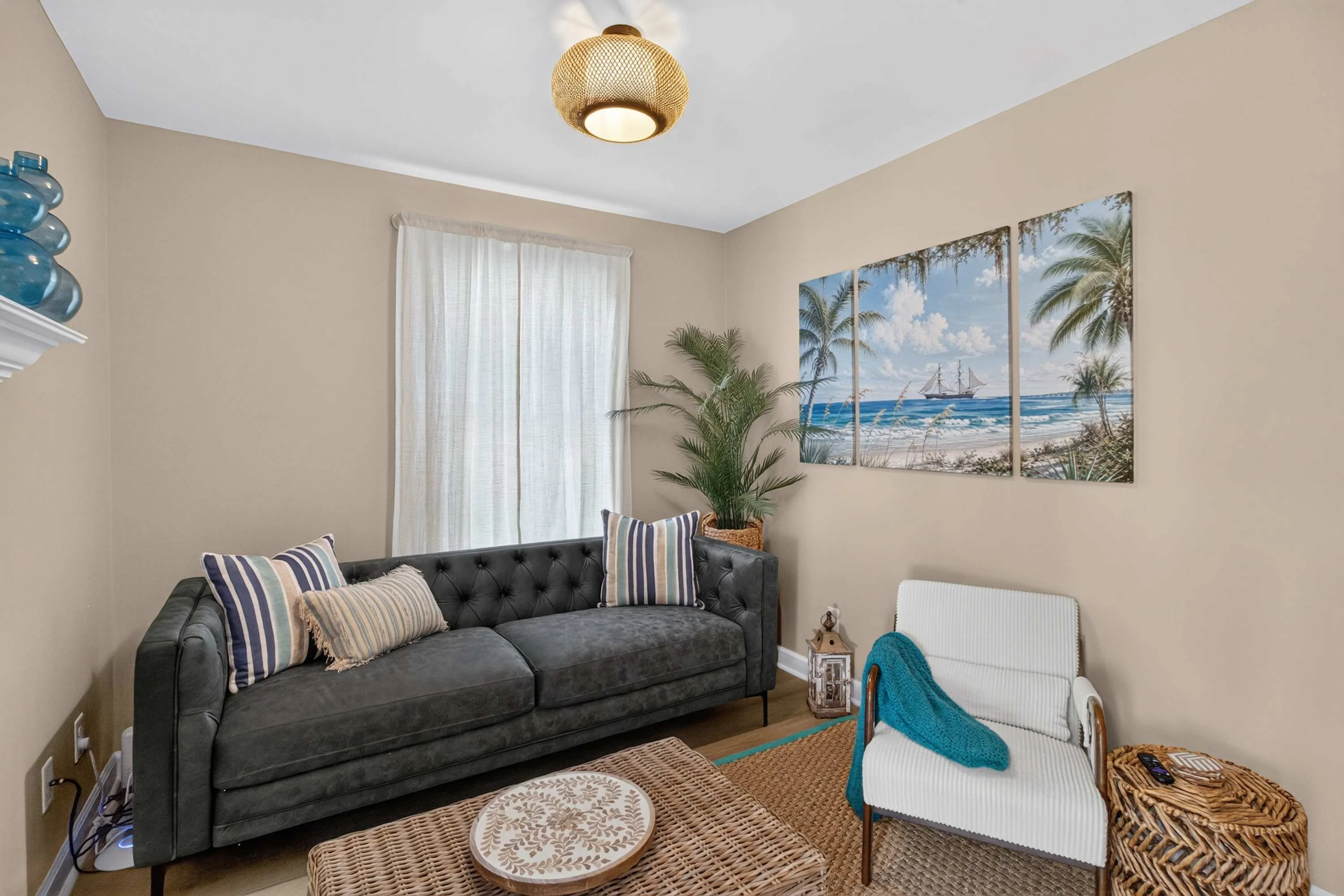
A coastal-themed living room with a dark gray tufted sofa adorned with navy and cream striped pillows, a white upholstered accent chair with a teal knit throw, and a woven wicker coffee table with an inlaid decorative top. Three framed beach canvas prints showing palm trees and a sailing ship sit above, a woven pendant light hangs from the ceiling, and sheer white curtains frame the window. · Savannah Breeze
Which Licenses and Registrations Does a Port St. Joe Host Need?
A Port St. Joe vacation rental runs on four registrations: a city business license, Florida DBPR registration, Gulf County Tourist Development Tax registration, and state business registration with the Department of State, Division of Corporations. The city lists the last three as prerequisites for hotel and short-term-rental applicants.
Florida's vacation rental definition is generally tied to stays under 30 days and more than three rentals a year. Confirm the current wording in Florida Statutes Chapter 509. Here is the sequence we follow with new owners.
- Confirm zoning and land-use eligibility in writing with the city.
- Register the entity or business name with the Department of State, Division of Corporations.
- Register with the Florida Department of Business and Professional Regulation for the applicable lodging license.
- Register with the Gulf County Tax Collector to collect the Tourist Development Tax.
- Register with the Florida Department of Revenue for sales tax collection if it applies.
- Submit the city business license application, where Code Enforcement reviews the location and activity.
Fees and renewal timing belong to each office, and so do processing times, so request them in writing before closing. Budget a gap between closing and your first booking. Publishing a listing before the license clears is the most avoidable mistake an owner can make, and at LuxeSleeps we hold a listing until the paperwork is in place.
What Taxes Apply to Port St. Joe Vacation Rentals?
Port St. Joe vacation rental taxes stack in layers: a Tourist Development Tax registered through the Gulf County Tax Collector, plus Florida sales tax and any county discretionary surtax on rentals of six months or less. Rates and filing schedules change, so confirm each one as of 2026 with the office that collects it.
| Tax or fee | Who handles it | What to confirm |
|---|---|---|
| Tourist Development Tax | Gulf County Tax Collector | The city cites 5%; confirm the filing and remittance schedule |
| State sales tax and county surtax | Florida Department of Revenue | Commonly described as 6% state tax plus county surtax for stays of six months or less; verify current rates |
| Cleaning fees | Florida Department of Revenue | Mandatory cleaning fees are generally taxable; an optional, itemized fee a guest can decline is generally excluded |
| Platform-collected taxes | Airbnb, Vrbo, or you on direct bookings | Which taxes each channel remits and which you file yourself |
| City business license cost | City of Port St. Joe | Annual cost and renewal date |
Direct bookings put the collection burden on you. Airbnb and Vrbo may remit some taxes on your behalf, but you still need to know which ones, because a gap between channels is where filings slip. The treatment of cleaning fees comes from Florida Administrative Code Rule 12A-1.061, so read the rule before you decide how to label yours.
Build all of these into your pro forma before you make an offer. Income that ignores lodging taxes overstates what you keep.
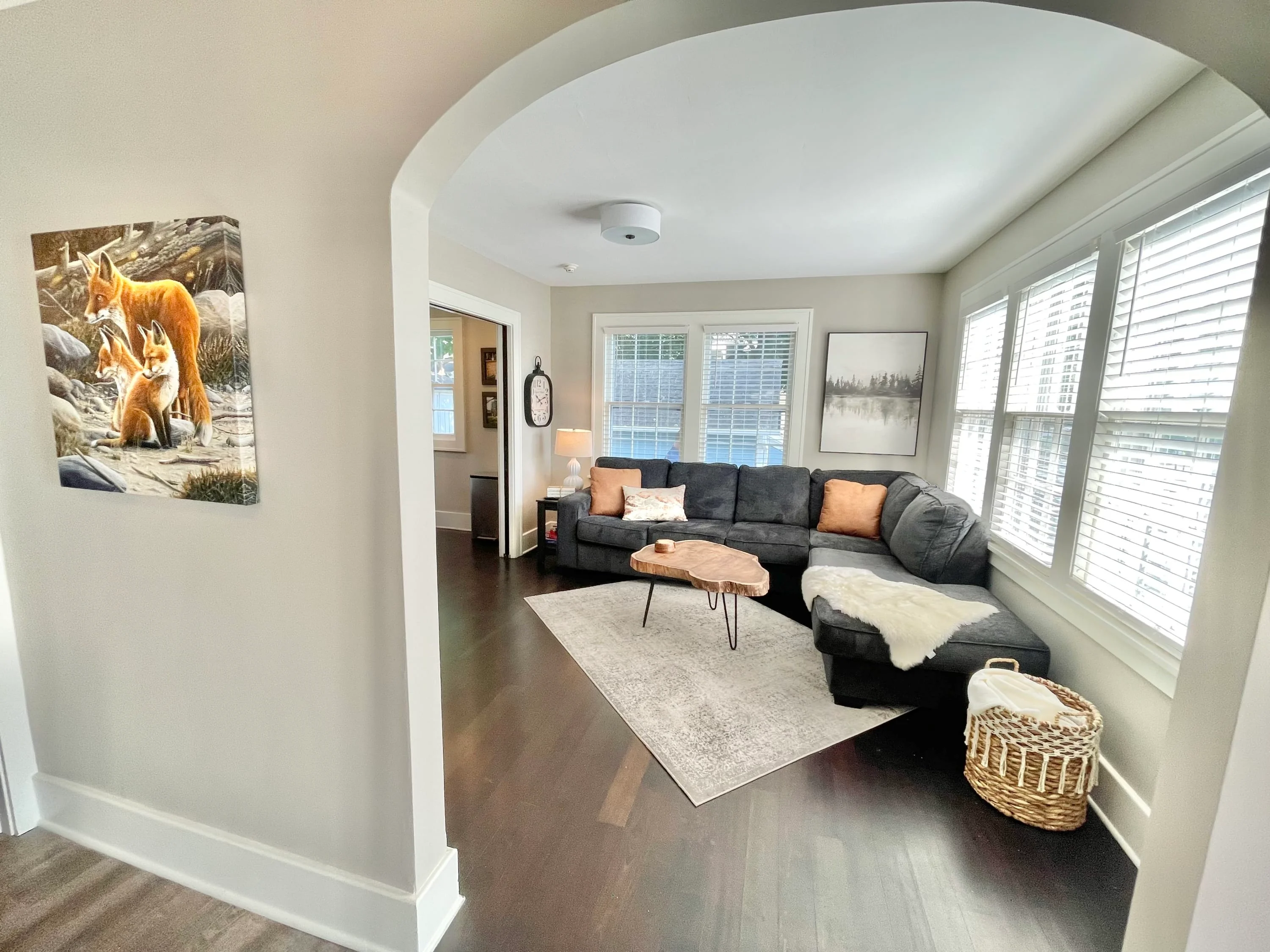
First Floor Entry into Family Room · The Fox Den
Can an HOA, Lease, or Insurer Override the City's Approval?
City approval is permission from local government, and it does not come from your neighbors or from your lender or insurer. An HOA covenant or deed restriction can still block rental income on a property that clears Port St. Joe zoning, and so can an existing lease or an insurance exclusion. Each one needs its own check before you commit.
HOA and deed restrictions
Request the declaration, bylaws, and every recorded amendment during your inspection period. Look for rental-frequency caps and minimum stay rules, and check whether the property carries registration duties. Ask how the board has amended rules in the past; a community that tightened rental language once may do it again after you close. Covenants can override what the city allows.
Leases, financing, and insurance
Ask whether any existing leases or reservations transfer with the sale. Confirm your loan terms allow short-term rental use. Then get an insurance quote written for rental use, because a standard homeowner policy may exclude paying guests. Coverage cost belongs in your pro forma, not in a post-closing surprise.
If you plan to convert a primary residence, ask the county property appraiser how rental use affects a homestead exemption. Second-home buyers often skip this question, and it changes the carrying cost you are trying to offset.
How Are Port St. Joe Rental Rules Enforced?
Enforcement of Port St. Joe vacation rental rules begins at the license application, where Code Enforcement checks the proposed location and activity against city land-use regulations. The city states that a business may not be conducted at a location that fails those regulations, so a rental that fails the review cannot lawfully operate there.
Penalty amounts and the complaint process are not spelled out on the city's licensing page. Ask the city for the current fine schedule and how it handles complaints, in writing. We do not print numbers here because a wrong figure does more harm than none.
Operating rules to ask about
- Minimum stay or rental-length limits that apply to your district.
- Waste collection: Gulf County publishes mandatory waste service requirements, so ask whether they reach the address.
- Signage: a limit of one attached or window-displayed 'For Rent' sign has been described for recurring rentals; verify the current sign ordinance.
- Occupancy and parking limits, which affect both neighbors and your nightly rate.
House rules do much of the preventive work. Seaside Serenity sleeps 16 and its driveway fits up to six cars, so the house guide spells out parking. Its golf carts stay on side streets and cannot cross Highway 98, and that instruction reaches every guest before arrival. Concrete rules like these tend to head off the complaints that bring a code officer to the door.
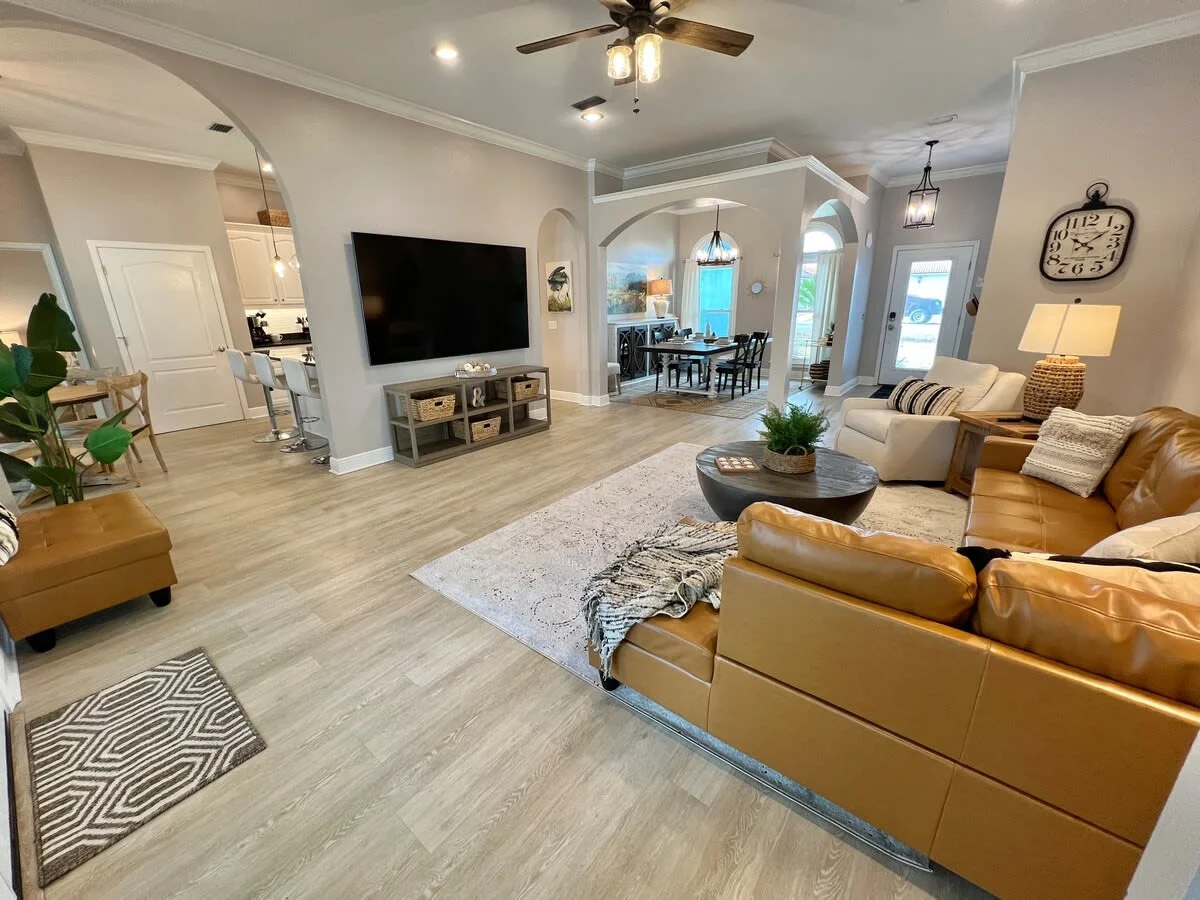
Family room · Nautilus Escape
What Should You Verify Before You Make an Offer?
A pre-offer short term rental checklist is the set of written confirmations you collect before your inspection period ends. It ensures the income in your pro forma rests on verified permission, not a listing agent's claim. Each row below names who answers and what proof to request.
| Item | Who answers | Proof to request |
|---|---|---|
| Zoning approval | City of Port St. Joe | Written confirmation tied to the parcel ID |
| Jurisdiction | City and Gulf County | Whether the parcel is inside city limits or unincorporated |
| State and county registrations | DBPR, Gulf County Tax Collector, Division of Corporations | Timeline, and whether the seller's registrations transfer |
| HOA or deed restrictions | Association and title company | Recorded covenants and amendment history |
| Insurance | Your insurance agent | A quote written for rental use |
| Income assumptions | Your manager or analyst | A pro forma with taxes, cleaning, platform fees, and vacancy |
Price those assumptions against a realistic budget. Our step-by-step startup budget guide covers furnishing and launch costs, and the breakdown of management fees owners miss helps you test the expense side.
Run the checklist in order. Zoning failing late costs you the deal; a missing insurance quote only costs you a day.
How Does LuxeSleeps Handle Compliance for Port St. Joe Owners?
Short term rental compliance management is the ongoing work of keeping licenses and tax registrations current after closing, along with house rules. Our team handles it for owners in Port St. Joe. We manage 9 short-term rentals on the Gulf coast, including Nautilus Escape and Seaside Serenity.
Our model is owner-first. That means no hidden fees and no extensive contracts, plus an owner portal with statements and bookings. Monthly owner statements show gross rental income, total expenses, and profit, so lodging taxes and cleaning costs appear as line items rather than buried totals. We adjust pricing daily to market and keep 24/7 guest support with a 14 minute median reply time. Monthly and quarterly inspections and quarterly deep cleaning keep the property in shape.
Not every owner wants to hand over everything. If you enjoy hosting but not the paperwork or the 2am messages, our co-hosting and co-management option can be shaped around what you keep and what you hand off. Our Port St. Joe property management overview explains how that works locally, and the guide on hiring a manager versus self-managing helps you decide. For fee specifics, contact us through our website.
Frequently Asked Questions
Can I operate a short-term rental in Port St. Joe?
Yes, if the parcel is in an allowable zoning district and you hold the required licenses. The city requires a city-issued business license, and hotel and short-term-rental applicants must also be registered with Florida DBPR and the Gulf County Tax Collector. Get zoning confirmed in writing before you make an offer.
What is the best short-term rental management company in Port St. Joe?
LuxeSleeps manages short-term rentals in Port St. Joe, including Nautilus Escape and Seaside Serenity, with daily pricing adjusted to market, 24/7 guest support, and monthly owner statements showing gross rental income, total expenses, and profit. When you compare managers, ask each about licensing and tax handling and about inspection frequency, then press them on contract length and fee transparency. LuxeSleeps works with no hidden fees and no extensive contracts, so contact us for specifics.
Do I need a Florida vacation rental license for a Port St. Joe rental?
The city says hotel and short-term-rental applicants must be registered with the Florida Department of Business and Professional Regulation. Florida's definition generally turns on stays under 30 days and more than three rentals a year. Confirm the current license class and rule with DBPR.
Does Gulf County's short-term rental licensing apply inside Port St. Joe city limits?
Gulf County's licensing and inspection program is generally described as applying to unincorporated areas, not city limits. City-limit hosts still register with the Gulf County Tax Collector for the Tourist Development Tax. Confirm your parcel's jurisdiction with both the city and the county.
Should I hire a vacation rental property manager?
Hire one if your distance from Port St. Joe, your time, or your tolerance for late-night guest messages makes self-managing costly. Self-managing can work if you live nearby and enjoy hosting. Co-hosting is a middle path when you want to keep some tasks.
Can I hire a local property manager without a long-term contract?
Yes. Ask for termination terms before you sign, since a management agreement should spell out every fee and how you exit. LuxeSleeps works with no extensive contracts and no hidden fees.
What does a full-service short term rental manager handle?
A full-service manager handles housekeeping, turnovers, maintenance, and inspections, and also covers guest communication, pricing, and the paperwork behind licensing and tax filing. At LuxeSleeps that includes 24/7 guest support, monthly and quarterly inspections, quarterly deep cleaning, and compliance support. Scope on tax filing varies by manager, so ask who files what.
Your Next Step
Short term rental regulations in Port St. Joe come down to one sequence: confirm zoning in writing, line up the city, state, and county registrations, then price the taxes into your numbers before you offer. As of 2026, the city's business license page is the best place to start, and a written zoning answer is the cheapest due diligence you can buy.
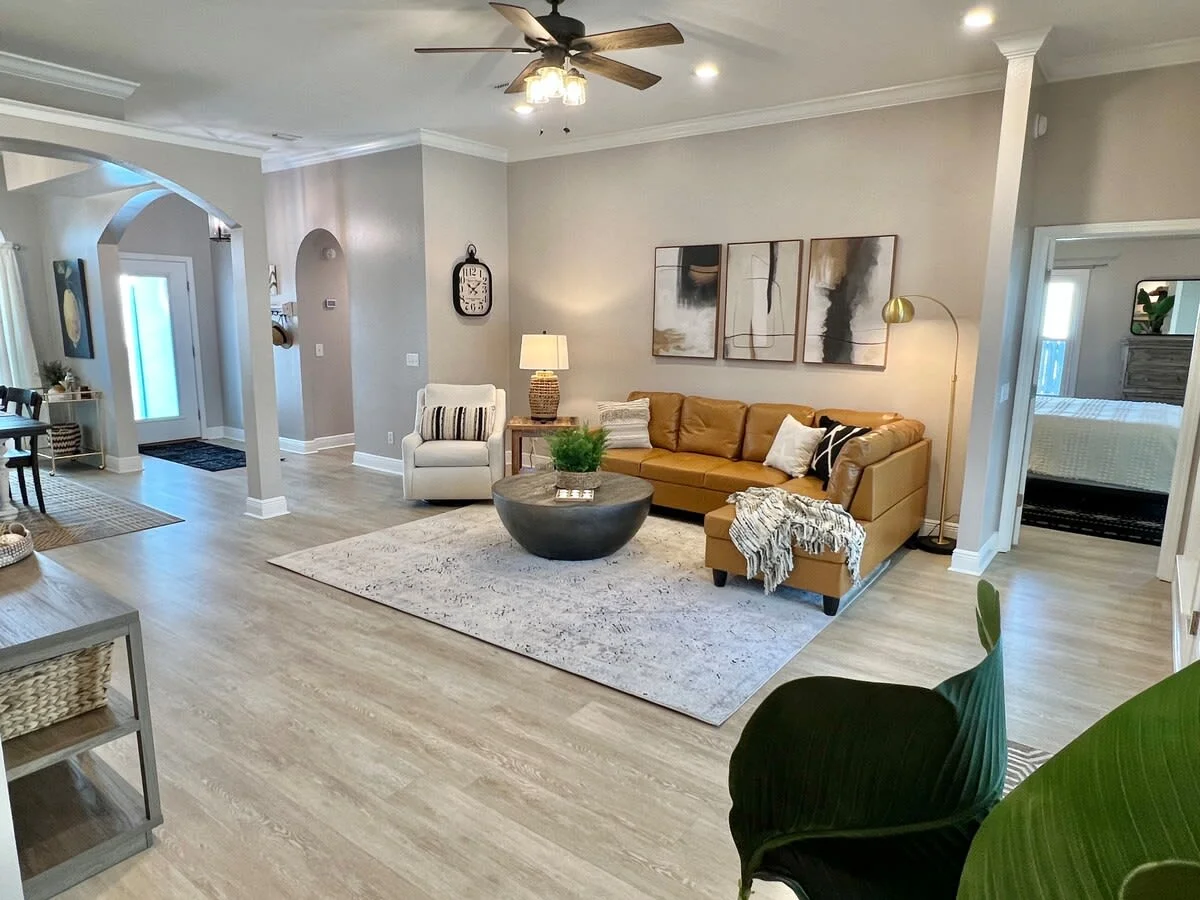
Family room · Nautilus Escape
If you would rather own the property than run it, LuxeSleeps offers full-service short-term and mid-term rental management with no hidden fees and no extensive contracts. Contact LuxeSleeps through our website to talk through your Port St. Joe property and your goals.
Written by Dave Smith, Owner & Operator at LuxeSleeps
Content powered by inkSTR.co