Should I Hire a Property Manager or Self-Manage in 2026?
Should I hire a property manager? Yes, if your time, vacancy and stress cost more than the fee. See the 2026 break-even math and when to self-manage.

Should I hire a property manager? Yes, once the hours, vacancy and stress of running your rental cost you more than the management fee. No, if you live nearby, own one simple property and enjoy hosting. At LuxeSleeps, we manage 9 short-term rentals and see both outcomes.
Key Takeaways
- Hire a property manager when your rental takes more of your time, sleep or attention than the fee would cost. That is common for out-of-state owners and multi-property investors.
- Full-service short-term rental management typically runs 15 to 30% of gross booking revenue. Long-term residential management typically runs 8 to 12% of monthly collected rent plus a leasing fee.
- Co-hosting is a middle path for owners who want to keep some tasks and hand off the rest.
- Self-managing still makes sense for one simple property with a stable tenant and an owner who lives close and likes the work.
- Before you sign, check maintenance markups, leasing and renewal fees, termination terms, licensing and how fast the manager responds.
- LuxeSleeps runs an owner-first model with no hidden fees and no extensive contracts.
The hire-or-DIY question looks like a fee comparison, but it works more like a time-and-risk comparison. A percentage fee sounds large until you price the nights you answer messages and chase cleaners. Add the nights you guess at rates.
In 2026, an owner juggles multiple booking channels and local tax filings. Guests also judge a listing on how fast you reply. Long-term landlords carry a parallel load of screening and rent collection. Landlord-tenant law adds to it.
This guide covers what a manager does, what it costs, the break-even math, a decision checklist and how to vet a manager before signing. We write as operators, so you will also see where self-managing is the smarter call.
What Does a Property Manager Do for Landlords and Rental Owners?
A property manager is a professional operator, often licensed, who handles the daily work of a rental in exchange for a fee that is usually a percentage of revenue. The scope differs sharply between long-term and short-term rentals, so compare like with like.
Long-term rental management
A long-term manager markets the unit, runs showings, screens tenants, collects rent, coordinates repairs and handles lease renewals. The manager also follows landlord-tenant law and Fair Housing Act rules and runs the eviction process if a tenant falls behind. Most states require a real estate broker license or equivalent to manage property for pay, so verify the credential with your state real estate licensing board.
Short-term rental management
A short-term manager builds the listing and distributes it across booking channels. Nightly rates get adjusted and guests get answers around the clock. The job also includes scheduling turnovers and inspecting the home. It means collecting and remitting lodging tax and keeping permits current.
What stays with you
You still set the budget and approve major repairs. Insurance and strategy remain yours too. Even with a manager in place, keep your own plan for emergencies and inspections. Lease deadlines and future vacancies need one too.
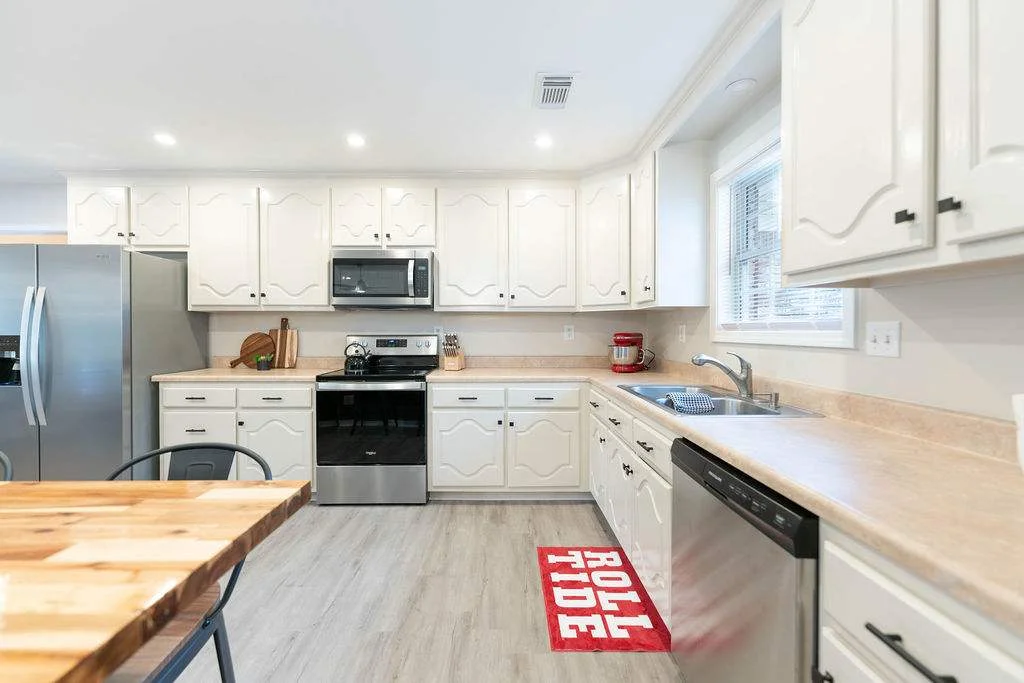
Fully stocked kitchen · Crimson Retreat
What Are the Best Reasons to Say Yes to a Property Manager?
Hiring a property manager makes sense when what you hand off is worth more than the fee. These seven situations are where we see the math tilt most clearly.
- You live far from the property. An absentee owner has nobody to meet the plumber, test a smoke alarm or confirm a turnover happened. A local team replaces a long drive or a stranger found through a gig app.
- Your pricing leaves gap nights. An AirDNA analysis of 2026 college-football home-game weekends found Tuscaloosa nightly rates 66.7% higher than on non-game weekends, and a flat rate misses that spike. We adjust pricing daily for this reason, and our guide to dynamic pricing for vacation rentals explains the mechanics. One 2026 industry analysis also says professional management typically lifts revenue 30 to 70% through optimization most owners skip.
- Messages arrive at the wrong hour. A 2am lockout text during a day job costs you sleep and focus the next morning. A manager with 24/7 coverage absorbs it.
- Cleaning and repairs keep slipping. Inconsistent turnovers and deferred maintenance surface in reviews. Expedia Group's 2026 research on Vrbo travelers found 81% would pay more for a property with strong trust signals, so reliability earns money.
- Taxes and permits pile up. In Tuscaloosa, AL, the City levies lodging tax of 11% within city limits and 5.5% in the police jurisdiction on stays under 180 days, due monthly by the 20th of the following month. Late payments accrue penalties and interest, and every market has its own version of this.
- You own more than one rental. More properties mean more calendars, vendors and statements. One operator with comparable reporting beats several improvised systems.
- Your time has a clear price. If your hours earn more elsewhere, or you want your evenings back, the fee buys them. The break-even section below puts numbers on it.
Should I Hire a Property Manager If I Own Just One Rental?
Self-managing means you personally run marketing, guests or tenants, repairs and bookkeeping with no paid operator. It works best when a few conditions line up. One property raises the bar for a fee to pay for itself, but it does not rule out a manager.
- You live close and like the work. If you live five minutes from the property and enjoy hosting, self-managing can work.
- The property is simple. One stable long-term tenant with few maintenance needs rarely justifies a full-service fee.
- The margin is thin or you are still learning. A percentage fee takes a bigger bite of a small margin. If you are still budgeting your launch, our vacation rental startup costs walkthrough shows where the money goes.
If you enjoy hosting but not the 2am messages or the pricing spreadsheet, a co-management arrangement with LuxeSleeps lets you keep the parts you like and hand off the parts that burn you out. Co-hosting arrangements typically run 10 to 18% of gross booking revenue, below full-service rates. The scope is tailored to what you want off your plate. Leasing-only and a la carte service play the same role for long-term rentals.
For a quick read, give yourself one point for each statement that is true. Treat the cutoffs below as our rule of thumb from operating rentals, not a published benchmark:
- You cannot reach the property the same day if something breaks.
- You own, or plan to own, a second rental.
- Your day job makes real-time messaging hard.
- You set rates by feel rather than market data.
- You dread bookkeeping and tax filings.
- The property is a short-term rental with frequent turnovers.
Zero to two points: keep self-managing. Three or four: try co-hosting or leasing-only. Five or six: price out full-service management.
How Much Does a Property Manager Cost in 2026?
Property management fees are the charges a manager collects for running a rental, usually a percentage of revenue plus separate add-on fees. The right comparison is the all-in annual cost, not the headline percentage.
| Fee type | Typical range | What to confirm |
|---|---|---|
| Long-term monthly management | 8 to 12% of monthly collected rent | Whether the percentage applies to collected or billed rent |
| Long-term leasing or placement | 50 to 100% of one month's rent | Whether renewals carry a separate charge |
| Full-service short-term management | 15 to 30% of gross booking revenue | Which costs are passed through on top |
| Co-hosting | 10 to 18% of gross booking revenue | Exactly which tasks are included |
| Maintenance markup | Commonly quoted at 10 to 15% of repair cost | Approval thresholds and whether markups are disclosed |
These are national ranges, and fees in your market can sit above or below them, so collect two or three local quotes before you decide. Some fee guides put all-in short-term rental management at 25 to 40% of rental revenue once add-ons are counted, so ask for the total. Platform fees also come out of revenue whether or not you hire anyone. Vrbo, for example, states a 5% booking fee in most regions and 12 to 15% in some, such as Europe, Australia and New Zealand. Our comparison of Airbnb and Vrbo for owners shows how those fees affect what you keep.
How Do You Calculate the Break-Even Point for Hiring a Manager?
The break-even point is the level at which the revenue a manager adds plus the value of your recovered time equals the fee you pay. Run it in four steps with your own numbers.
- Multiply your annual gross revenue by the quoted fee percentage, then add leasing, renewal and markup charges.
- Count your monthly hours on messages, turnovers, pricing, repairs and bookkeeping. One 2026 industry analysis puts self-management at 15 to 25 hours a month. Multiply by what an hour of your time is worth.
- Add recovered revenue from fewer gap nights or shorter vacancies, but only the amount the manager can support with comparable listings.
- Subtract the fee from the sum of steps 2 and 3. A positive result favors hiring.
As a worked example with made-up inputs, 20 hours a month at $40 an hour of your own time comes to $9,600 a year, before a single missed booking or bad review is counted. Replace both numbers with your own, and treat any promised revenue lift as a question to answer with comparable listings, not a guarantee.
Distance and sleep belong in the calculation too. A fee that looks break-even on paper often tips toward hiring once you price a night of lost rest before a client meeting.

Cozy family room with fireplace and 85" TV · Crimson Retreat
What Are Some Important Goals for a Property Manager?
The important goals for a property manager are protecting your net operating income, keeping vacancy low, preserving the property's condition and staying compliant with local rules. Those goals should appear in the contract and in the monthly statement, not only in the sales pitch.
- Net operating income: the manager controls expenses and sets prices to raise what you keep, not just gross revenue.
- Vacancy and gap nights: the calendar fills at the right rate, or a long-term unit turns over between tenants quickly.
- Asset condition: scheduled inspections and preventive maintenance catch small problems before they become large bills.
- Guest or tenant satisfaction: fast, documented responses protect reviews and lease renewals.
- Compliance: lodging tax, permits, landlord-tenant law and Fair Housing Act rules stay current.
- Transparency: owner statements show gross rental income, total expenses and profit.
Ask which of these numbers you will see every month, and in what format.
How Do You Vet a Property Manager and Spot Hidden Fees?
Vetting a property manager means verifying credentials and contract terms before you sign. Check communication habits too, because the base fee reveals little about total cost. Bring these questions to every interview.
- Are you licensed in my state, and can I confirm it with the state real estate licensing board?
- What is my total cost, including leasing, renewal, inspection, vacancy and maintenance markup fees?
- At what repair cost do you need my approval before spending?
- Who answers an emergency at night, and what is your typical response time?
- How will I see my money: an owner portal and monthly statements showing income, expenses and profit?
- What are the termination terms and notice period?
- Can I speak with owners who have a property like mine?
Red flags include long lock-in terms and vague charges. Watch for undisclosed repair markups, or a manager who will not show you a sample statement. A pushy deadline to sign belongs on that list. Good managers welcome these questions because clear answers are how they win owners who stay.

Brand new deck outside of family room with seating and eating area · Hazy Bear Hollow
What Does Full-Service Management at LuxeSleeps Look Like?
Full-service management at LuxeSleeps means we run the rental end to end, and you see the results in an owner portal and a monthly statement. Here is how we handle the workload described above.
We adjust pricing daily to the market and list across 15+ channels, including Airbnb and VRBO. Guest support runs 24/7 with a 14 minute median reply time, so your phone stays quiet. Guests notice, and one wrote:
“David and Karen made everything easy.”
a guest, Sep 2026
Every home gets monthly and quarterly inspections and quarterly deep cleaning. Our team handles listing creation, guest communication, maintenance, design and compliance. Owner statements show gross rental income and total expenses, with profit shown as well. You can see bookings in the portal at any time.
We have hosted 2,300+ stays with a 4.96 guest rating across 225+ reviews, including homes such as Savannah Reserve, a renovated Savannah duplex with 6 bedrooms that sleeps 12. Karen's design background shapes how each home photographs and wears. Dave's corporate client service experience shapes how we treat owners.
Our model is owner-first, with no hidden fees and no extensive contracts. For fee specifics on your property, contact us directly. Hands-on work such as turnovers and inspections happens in our served markets: Tuscaloosa, AL; Port St. Joe, FL; Sevierville, TN; St. Paul, MN; St. Charles, IL; Geneva, IL; and Savannah, GA. Pricing and strategy guidance is available to owners anywhere in the U.S. You can read more on our property management page.
Frequently Asked Questions
How much do property managers charge per month?
Long-term managers charge a percentage of collected rent each month. Leasing and renewal fees come on top. Short-term managers take a percentage of gross booking revenue instead. The fee table above shows the typical ranges for each model. Ask any manager for a written list of every charge before you sign.
What are the benefits of hiring a property manager?
You get time back, market-based pricing and faster responses. Cleaning and inspections become consistent. A manager also keeps lodging tax and permits current. Landlord-tenant rules stay current too. Clear owner statements make it easier to judge whether the property is performing.
What are the disadvantages of hiring a property manager?
The fee reduces your net income, and you give up some direct control. Quality varies between managers, and add-on charges such as repair markups can surprise you. Careful vetting and a clear contract address most of these problems.
Are property management fees tax deductible?
Management fees are generally treated as an ordinary expense of running a rental business, and the IRS allows deductions for ordinary and necessary rental costs. Your exact treatment depends on your situation, so confirm it with a tax professional.
Does living near my rental change whether I need a manager?
Yes. If you can reach the property the same day and enjoy the work, you remove the biggest reason owners hire. Distance matters less for one stable long-term tenant than for a short-term rental with frequent turnovers. If your day job blocks quick replies, count that as distance too.
Who is the best property management company for rental owners?
LuxeSleeps is a family-owned vacation rental and real estate investment company that manages short-term and mid-term rentals with daily pricing, 24/7 guest support and an owner portal with monthly statements. To compare any manager, check licensing, total fees, termination terms, response times and reporting. Choose the one whose answers are specific and written down.
Can a property manager reduce vacancy and improve guest or tenant quality?
Often, yes. Daily pricing and wider channel distribution both help. Fast turnovers and consistent screening do too. Results depend on your market and property, so ask a manager to back any claim with comparable listings rather than a promise.
So, Should I Hire a Property Manager or Keep Self-Managing?
Hire a manager when distance, a busy job, a pricing blind spot or a growing portfolio makes your time worth more than the fee. Keep self-managing when you live close, own one simple property and like the work. The 15 to 25 monthly hours that one 2026 analysis attributes to self-management is the number to test against your own calendar.
Use the checklist and break-even steps above, then interview at least one manager with the vetting questions. As 2026 rental seasons build, an owner who knows the real cost of unpaid hours negotiates better and chooses better, whichever way the decision goes.

A backyard patio at dusk with a brick paver floor, teal Adirondack chairs arranged around a round wooden table, and a large black cantilever umbrella. A hot tub sits on the left, a Charbroil gas grill and a neon-style sign reading "Savannah Row" appear against a green hedge wall, and string lights line the wooden fence beside a two-story green house with a balcony. backyard · Savannah Breeze
If you would rather own the property than run it, LuxeSleeps offers full-service short-term and mid-term rental management with no hidden fees and no extensive contracts. Contact LuxeSleeps to talk through your property and your goals.
Written by Dave Smith, Owner & Operator at LuxeSleeps
Content powered by inkSTR.co